
I forgot to mention last night that we’d hit a proverbial pot of gold. While dining outside is very popular in Europe, we’ve never been able to do it because it’s the smoking section. Typically, we’ll find some restaurant we want to try and end up as the only couple dining indoors. But last night when we asked to be seated at Chez Lapin and told the server “no smokers” she led us to a section of the outdoor tables and sure enough, we didn’t smell a single puff all night long. Perhaps we’ll hit the jackpot again?
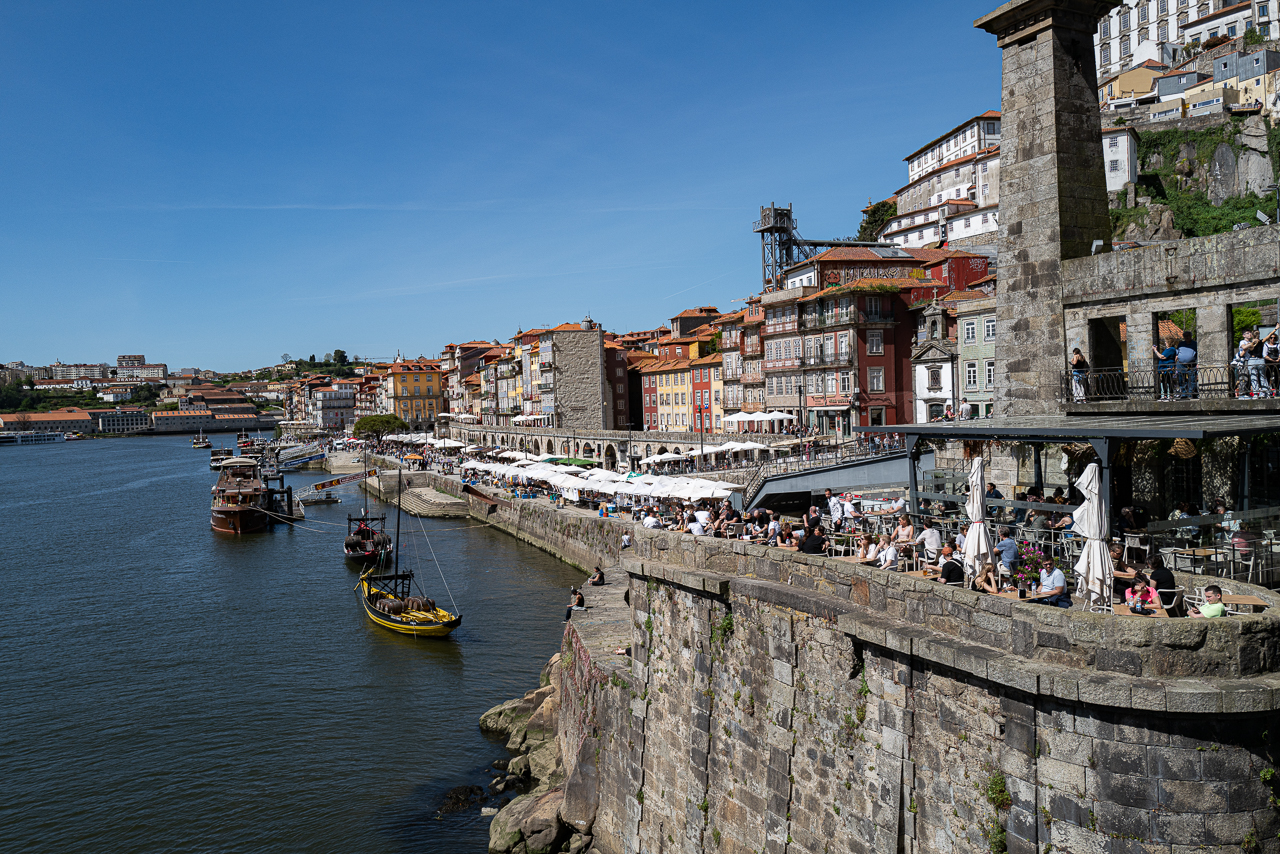
We had a good night’s sleep, got up, had some yogurt for breakfast, and made a plan for the day. Our initial idea was to go find coffee and then go to the grocery store to top off the larder, but we also wanted to do a river cruise. They have cruises here on barcos rabelos, traditional lateen-rigged Portuguese sailboats that were used to transport cargo up and down the Douro River. The cruises are very popular and sell out early and our weather forecast for the rest of the week is not cruise-friendly, so instead of Plan A we went for Plan B and headed down the hill towards the Ribeira waterfront. Since they leave on an hourly basis, we figured we’d get tickets for a slightly later departure and go and find some coffee. As it turned out, we got in line, bought our tickets, and only had to wait for 15 minutes before boarding.
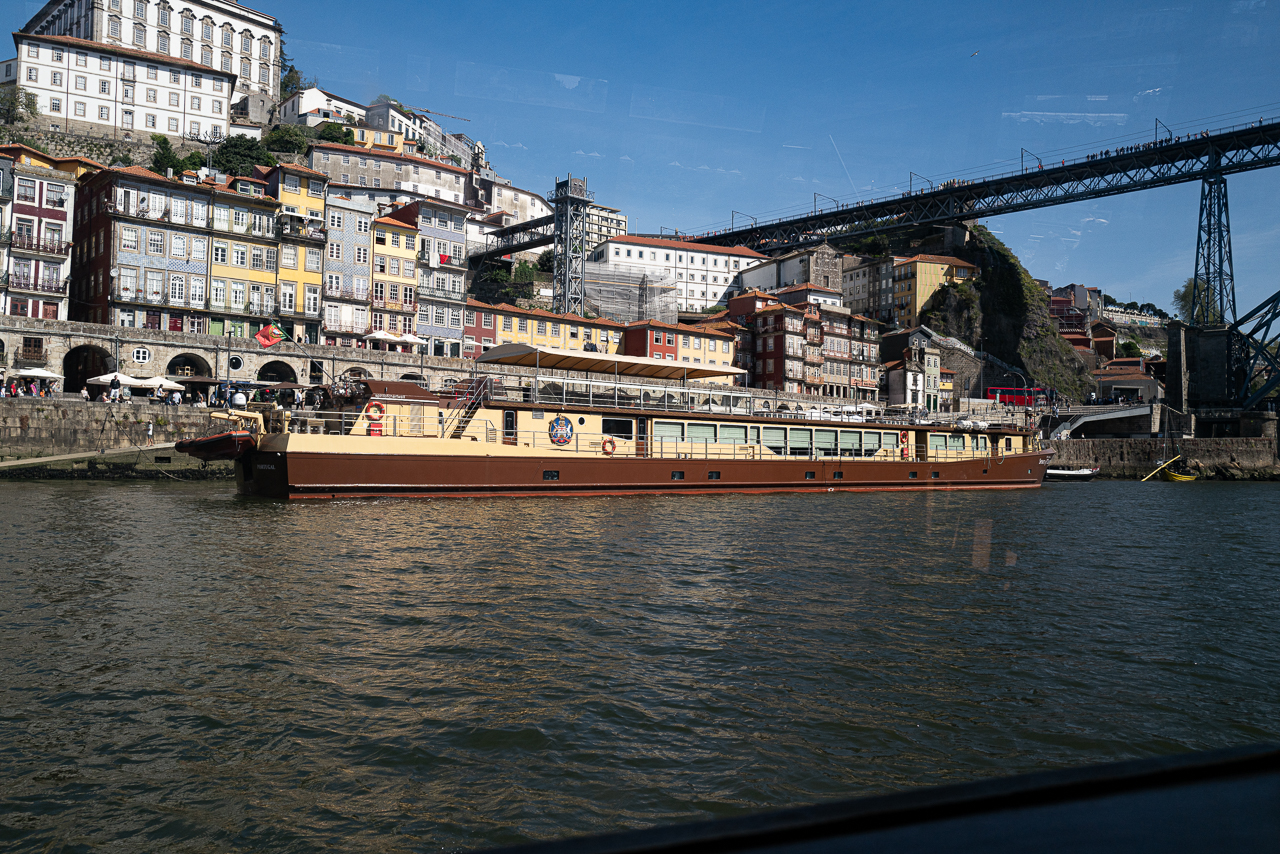
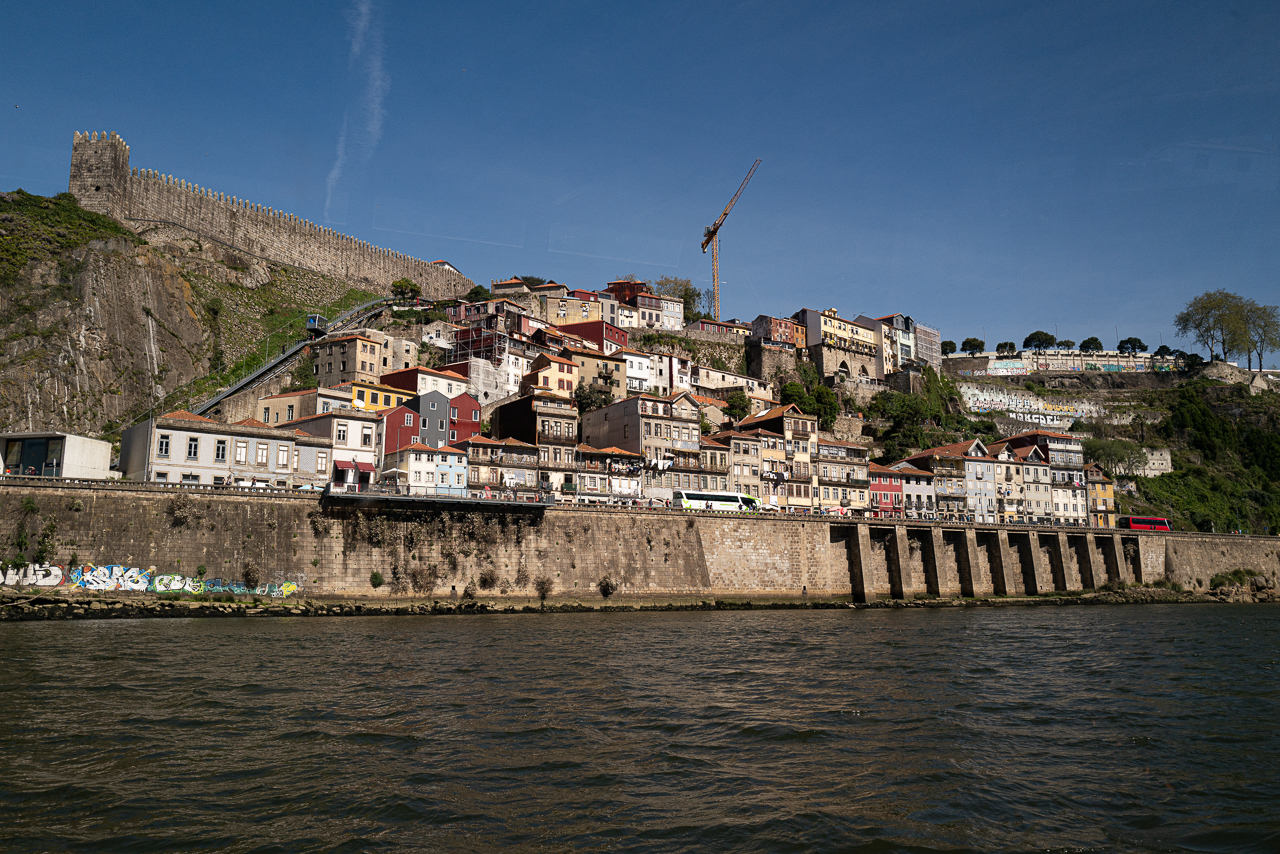
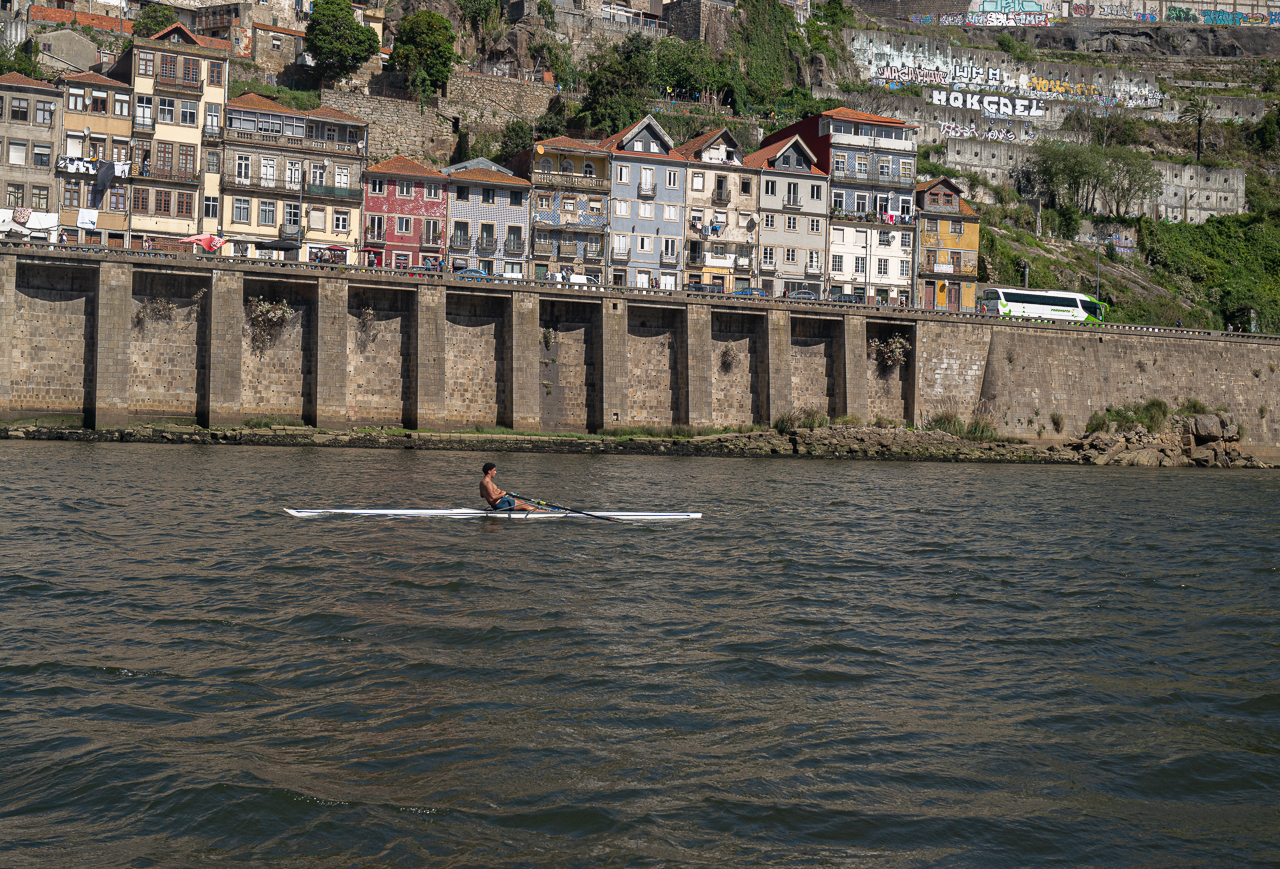
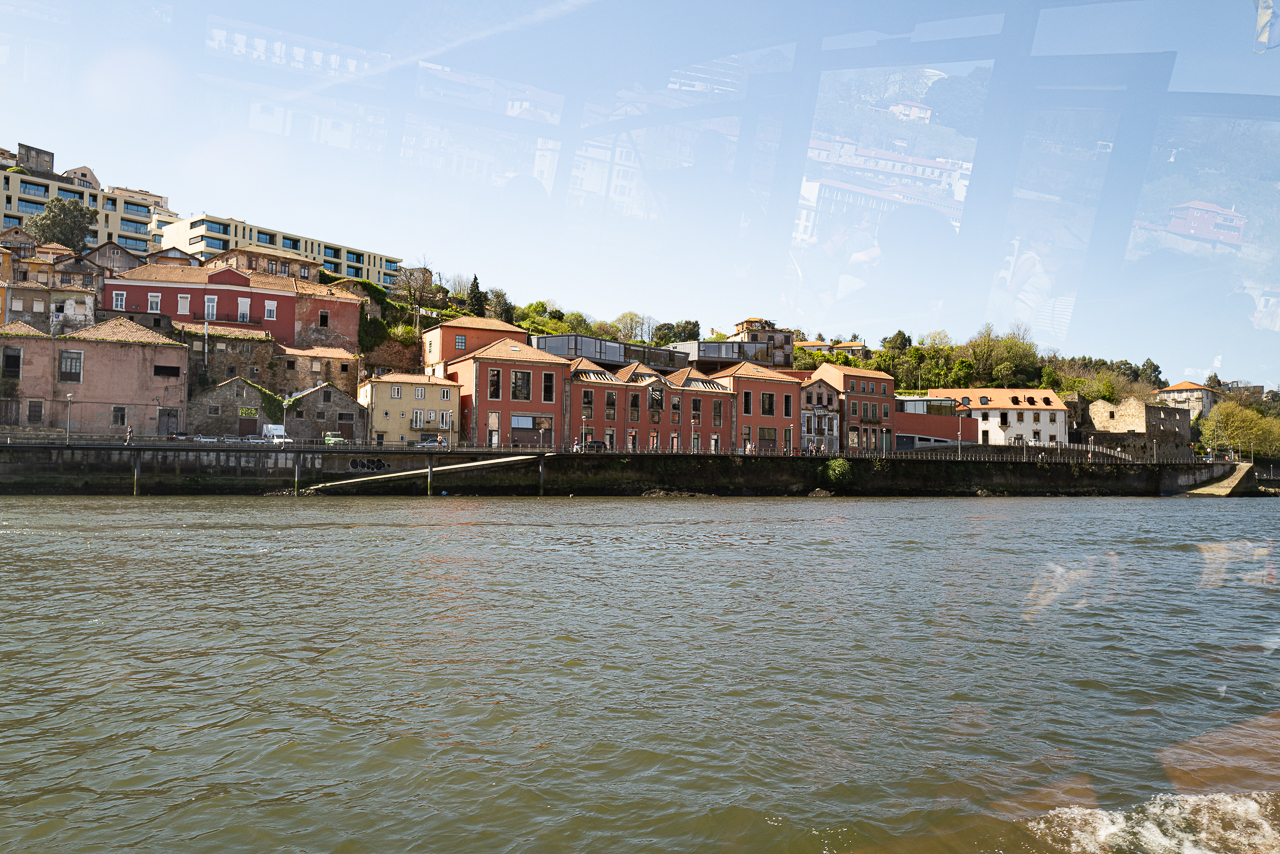
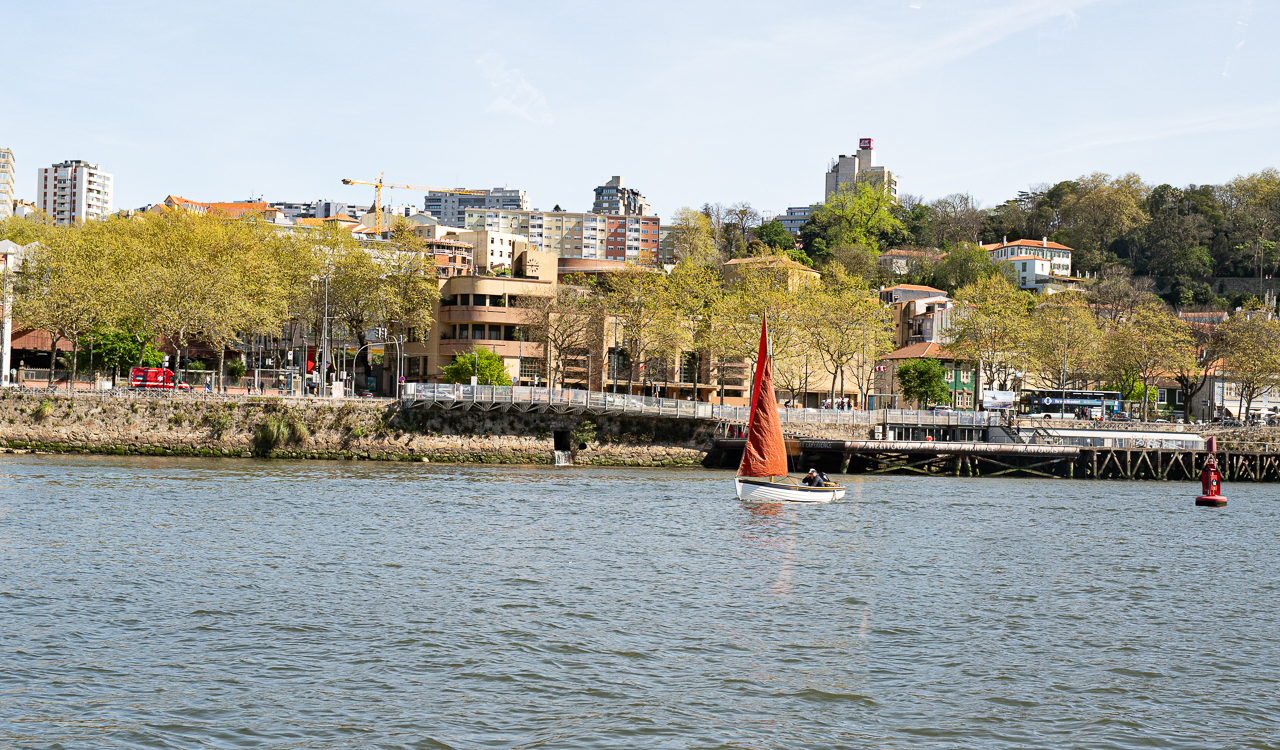
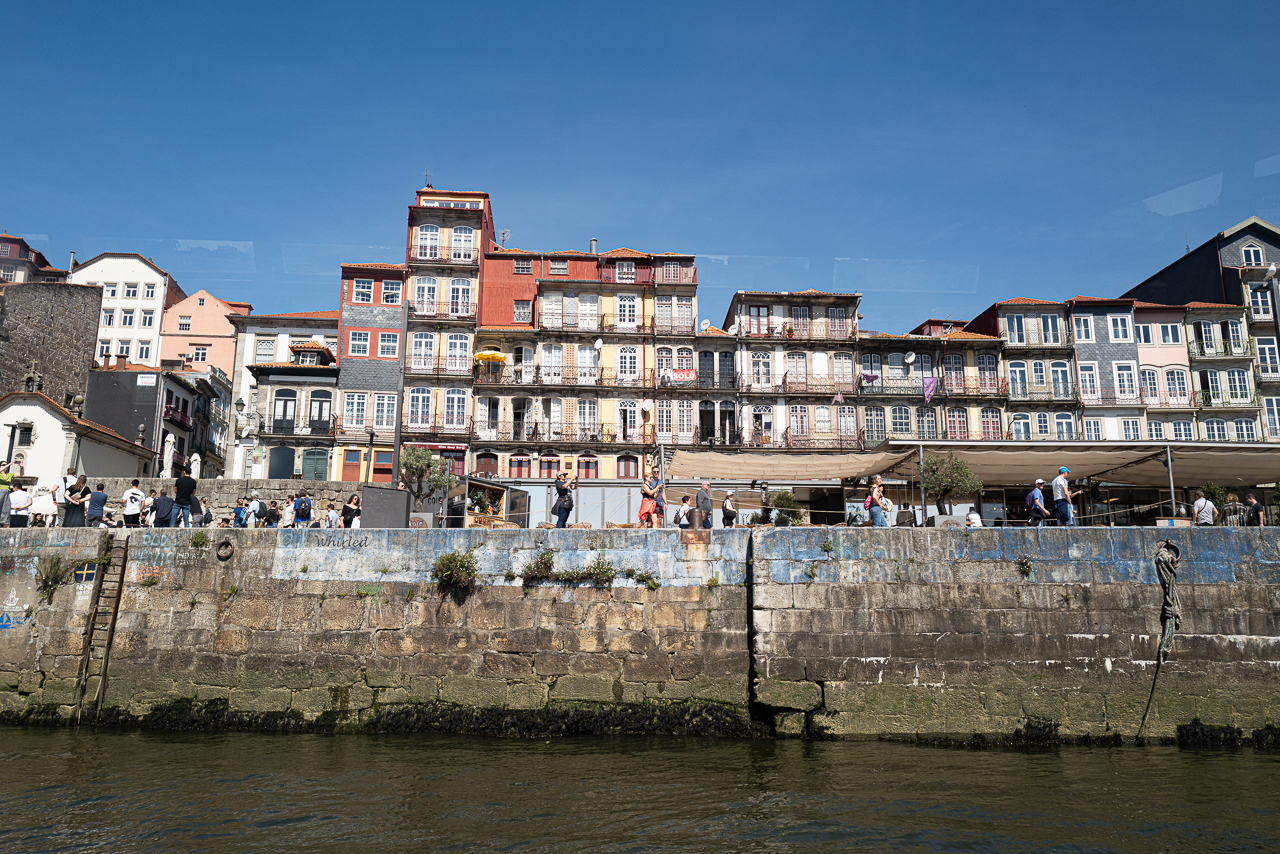
The cruises are known as 6-Bridges Tours because, well, there are 6 bridges across the river here. We pulled away and headed up river giving us a nice view of the Oporto side of the Douro. It’s clear to see why this city has a romantic reputation for travelers. Red-roofed pastel-painted buildings, clinging to the hillside with the ancient spires of churches sticking out at the top of the hill. It’s very pleasing visually, especially on a beautiful day like today.
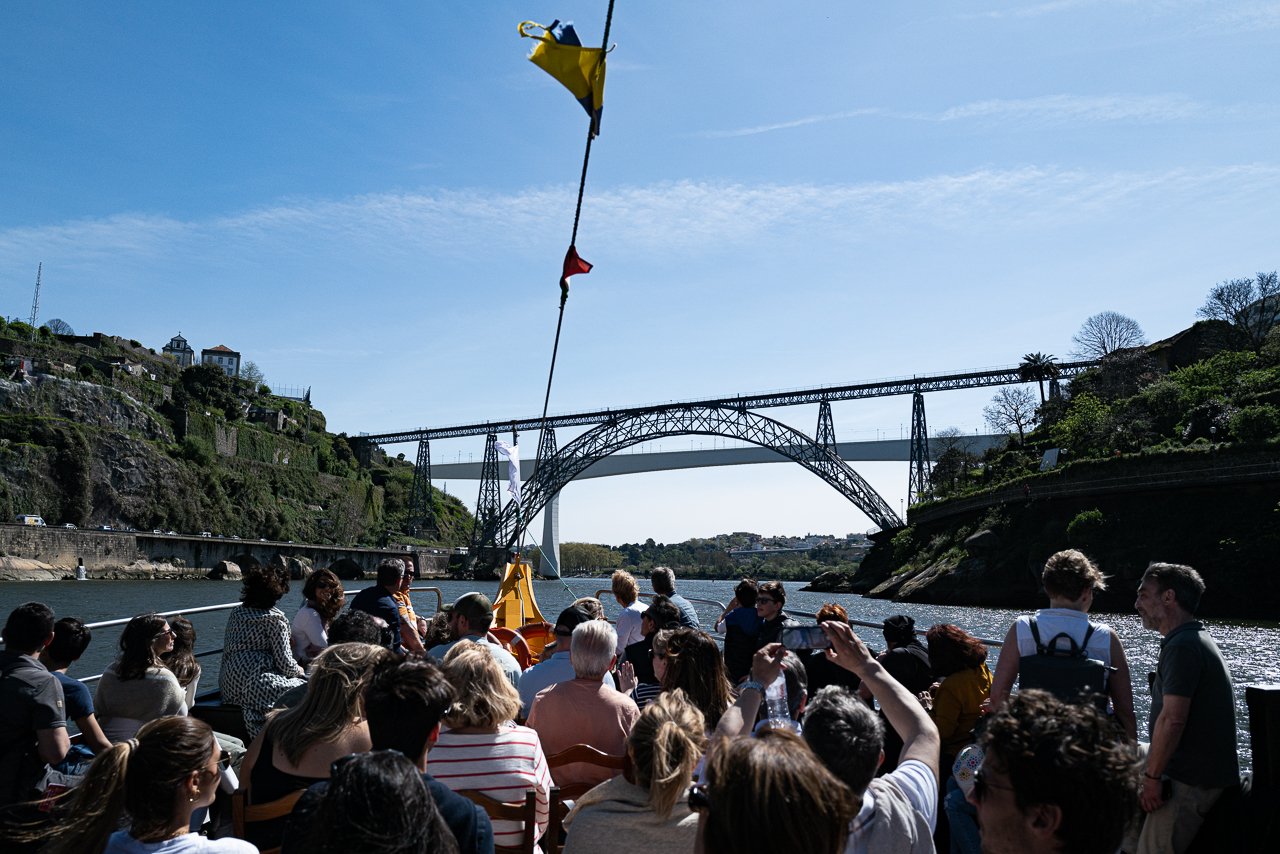
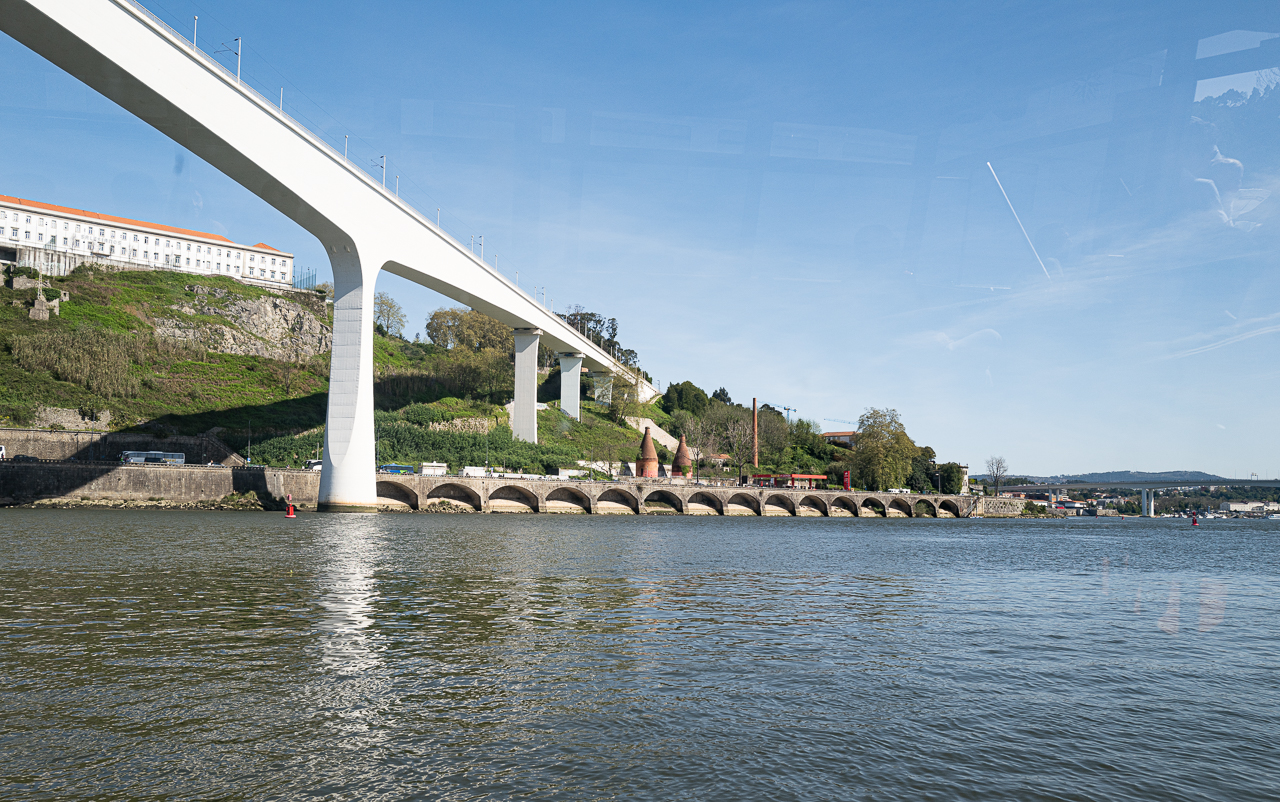
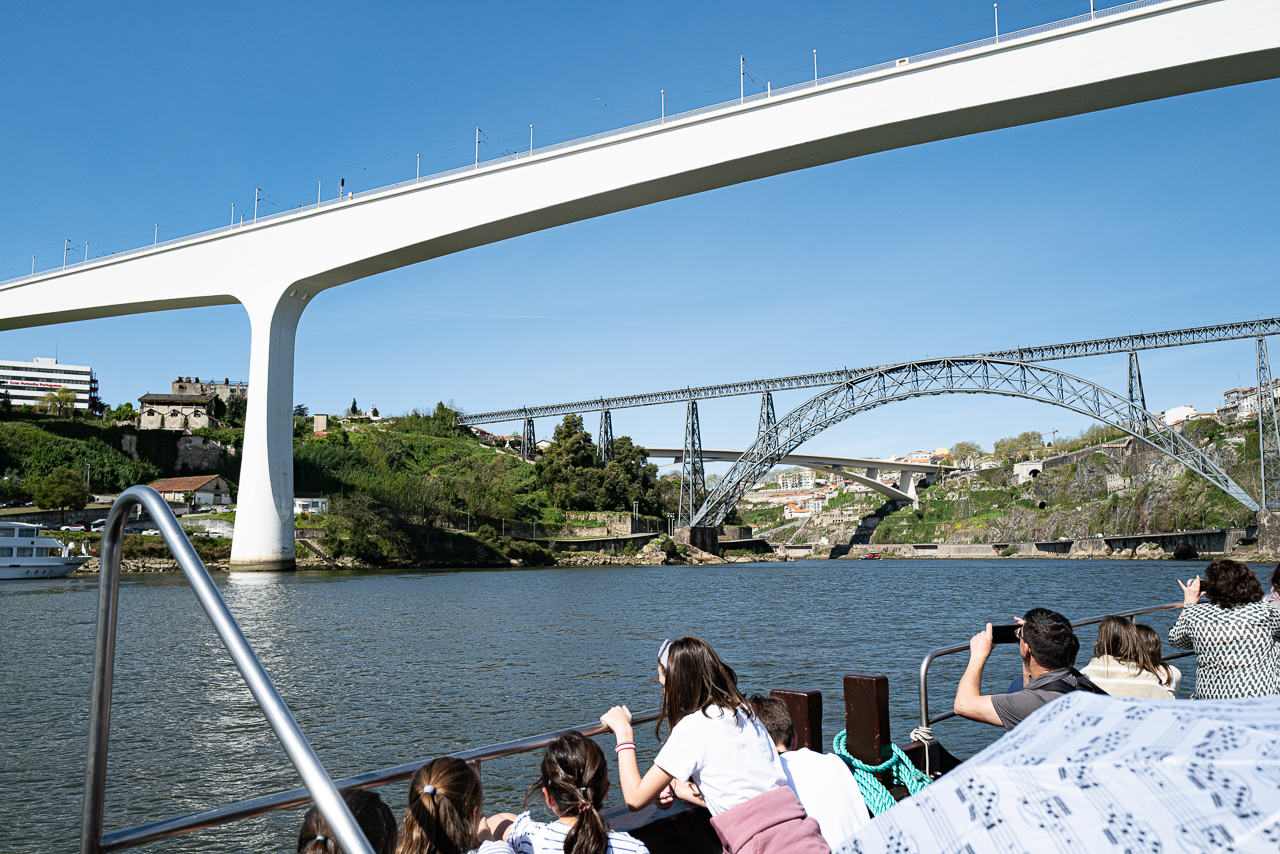
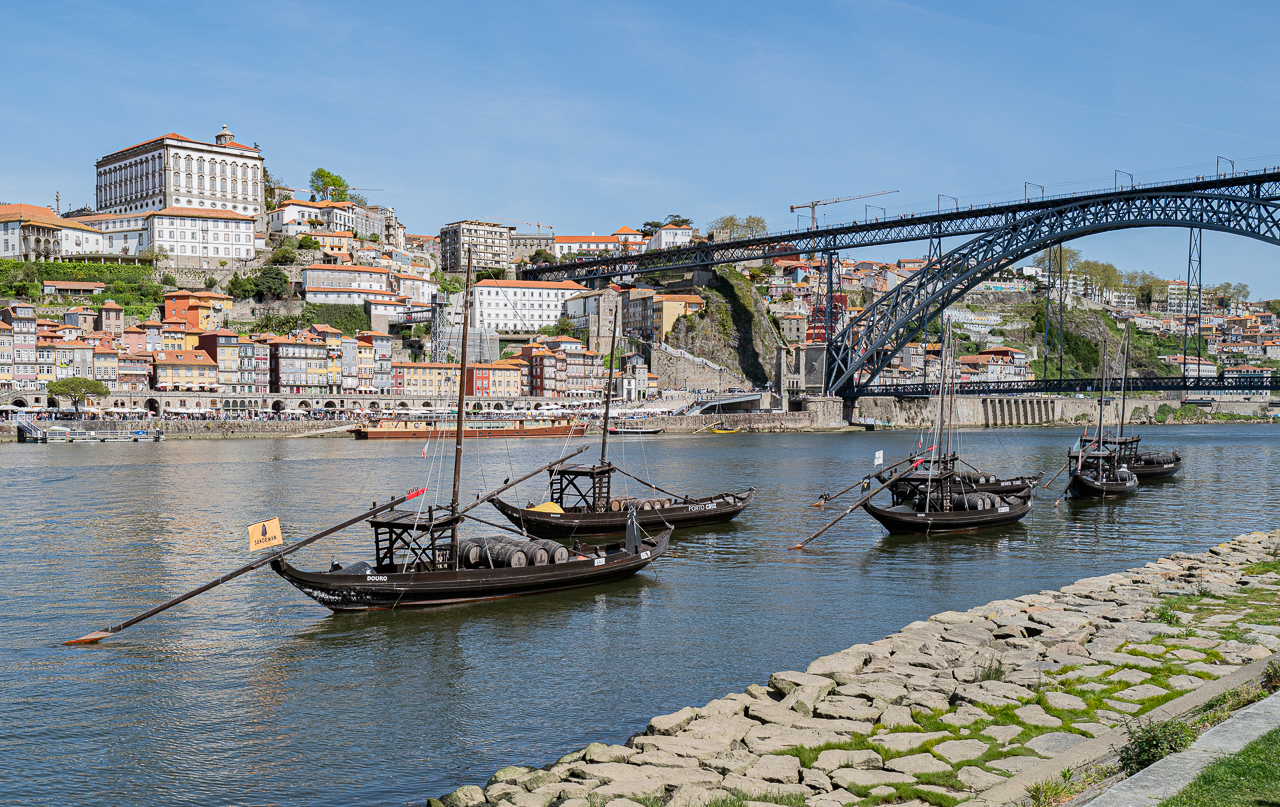
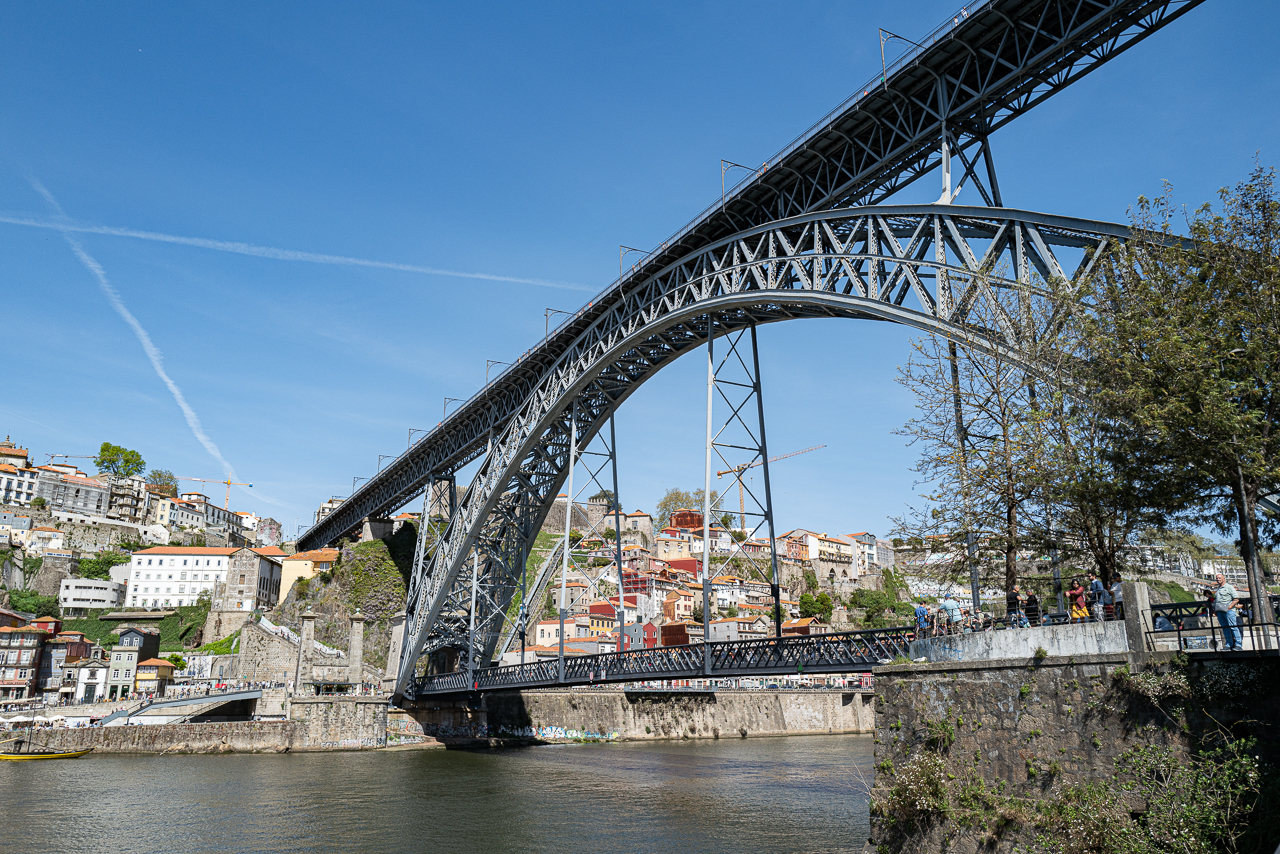
The first bridge, the Pont Dom Luis, was designed and built by Gustav Eiffel’s partner, Theophil Seyrig, and the influence is very clear. The second bridge is called the Ponte Infante Dom Henrique. Number 3, the Ponte Dona Maria, was built by Eiffel and is no longer used. Numbers 4 and 5, Ponte Sao Joao and Ponte do Freixo are modern highway bridges. We did a U-turn under #5 and headed back toward the ocean.
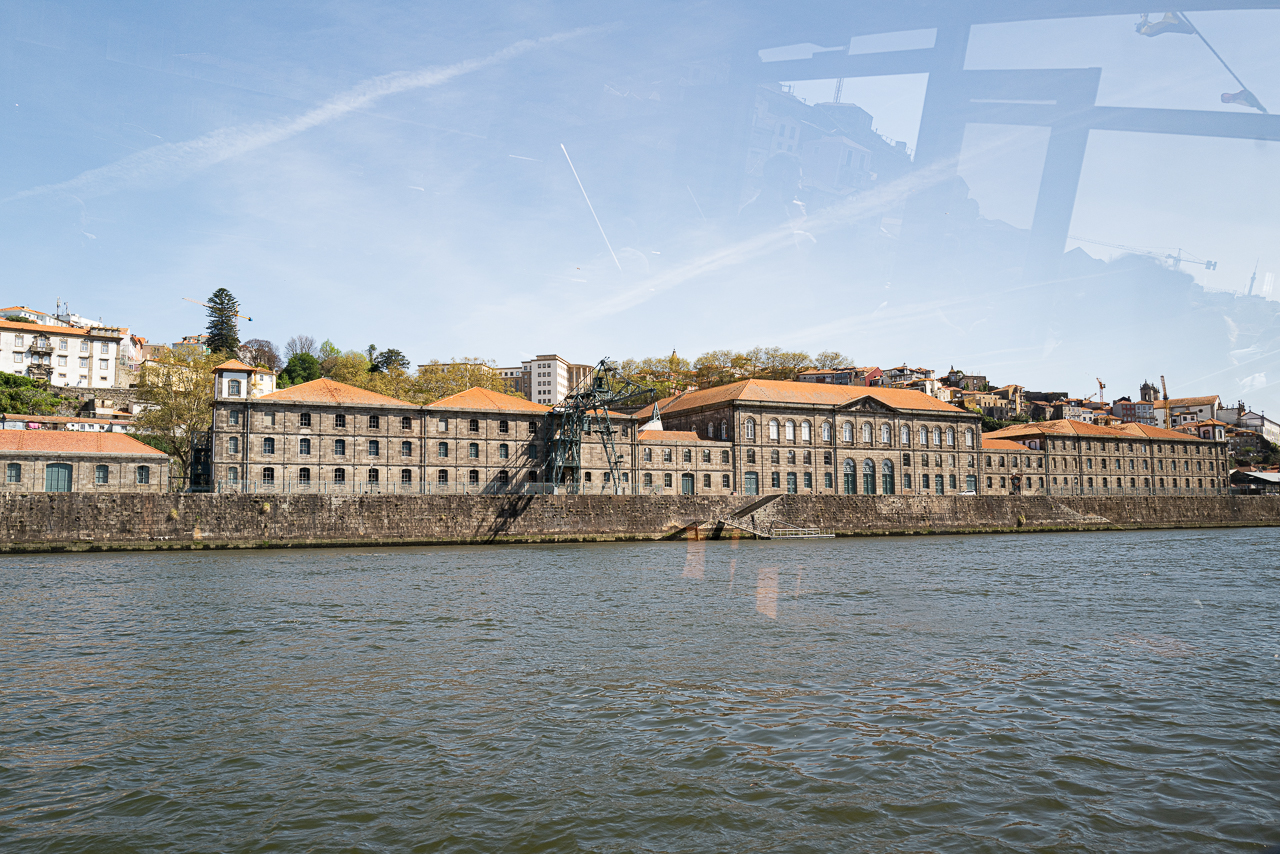
On the other side of the river is Villa Nova de Gaia, home to many Port Wine “lodges.” While Porto didn’t get its name from its famous product (the Romans called it “Portus Calle” which is the source of the name of the city and the country,) Port Wine did get its name from the city. This fortified wine has a fairly recent history although wine production dates to the Roman era.
The process was born in the 18th century and has a similar story to the production of Sherry, down the coast in Jerez, Spain. The main driver for the production was the ongoing political turmoil between England and France which resulted in wine embargos. The British were looking for an alternative source of wine and found it here along the Douro. Port is a “fortified wine” which means that brandy is added to regular wines giving them a higher alcohol content, increased sweetness,l and less sensitivity to spoiling during transport. The result is a wine we still enjoy today, mostly produced and shipped from the distilleries along the river.
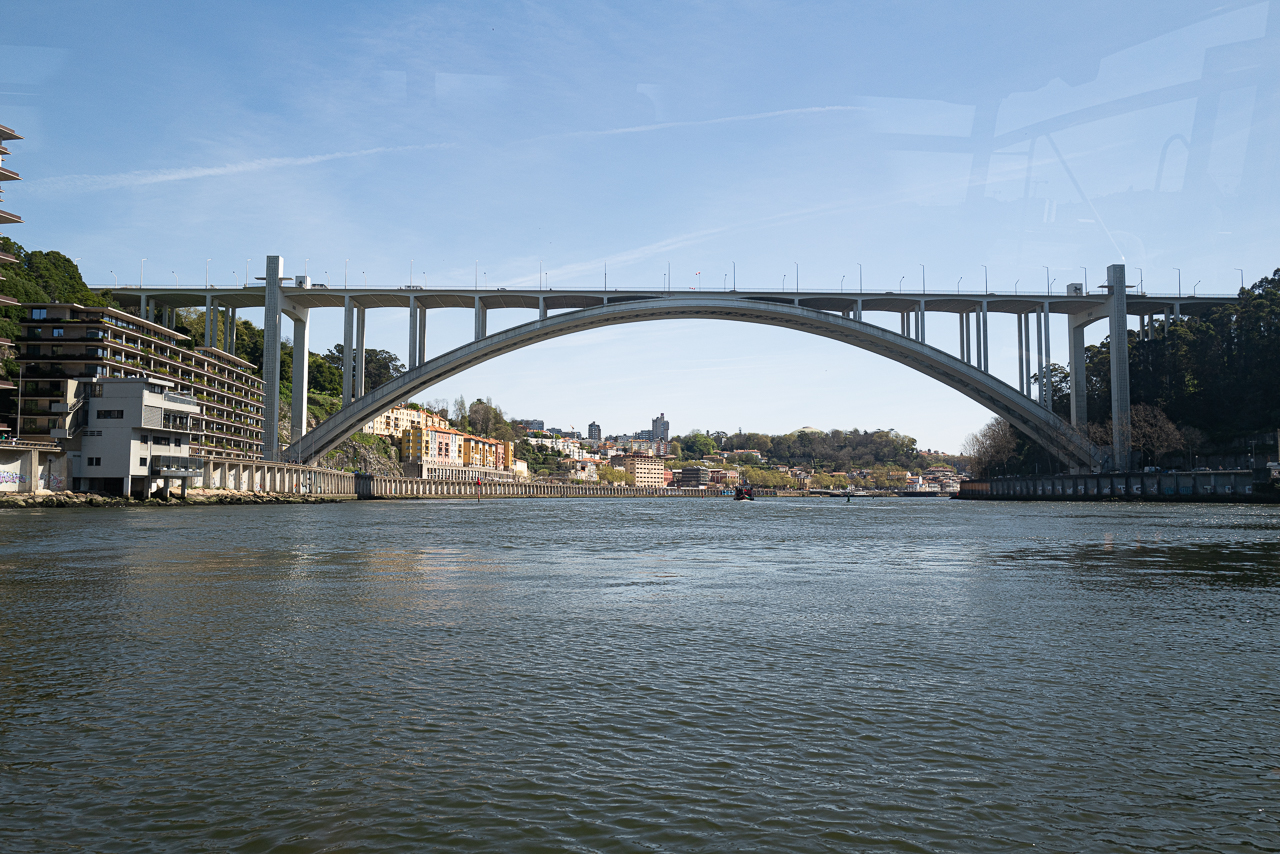
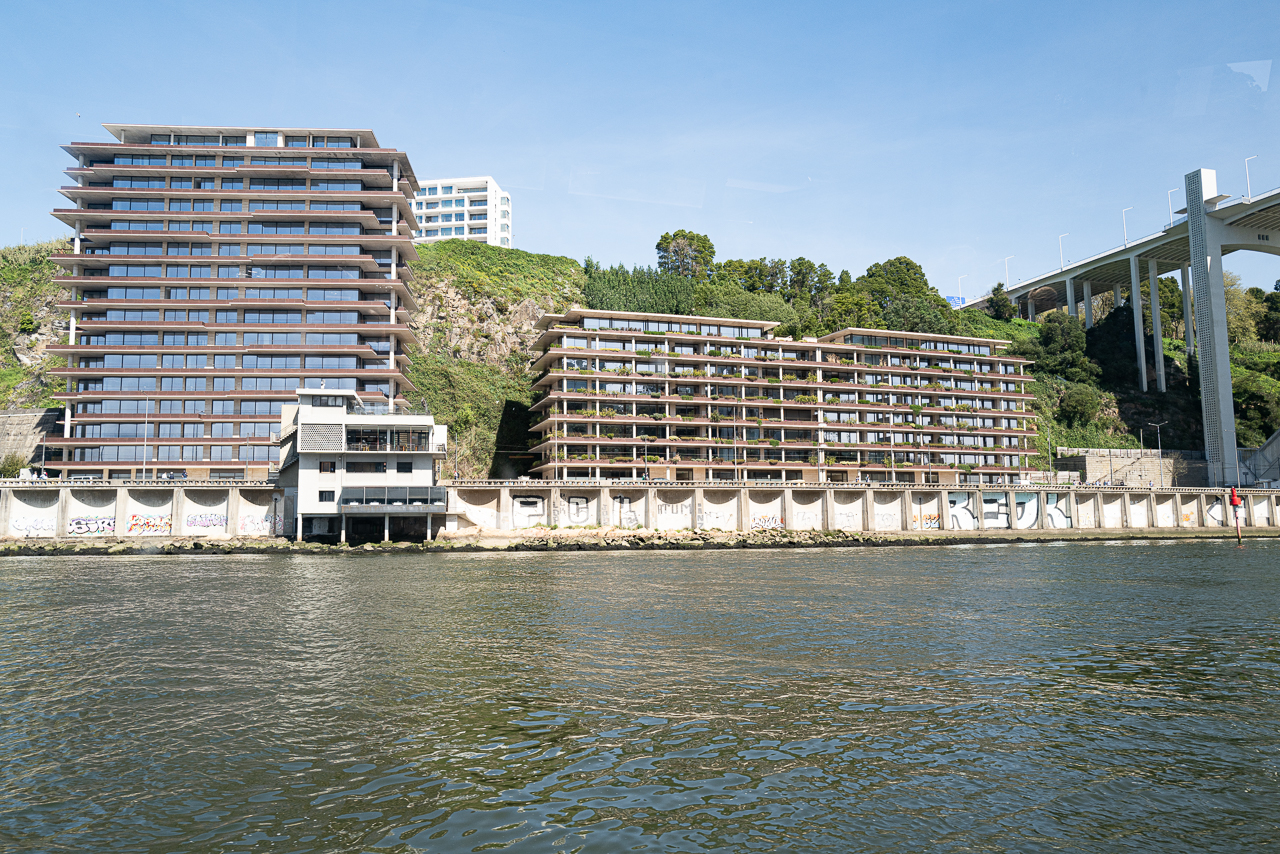
We turned around just within sight of the Atlantic, and under the last bridge of the tour, the Ponte Arrabida, which set numerous records for concrete bridge construction. Today it carries one of the major regional autoroutes.



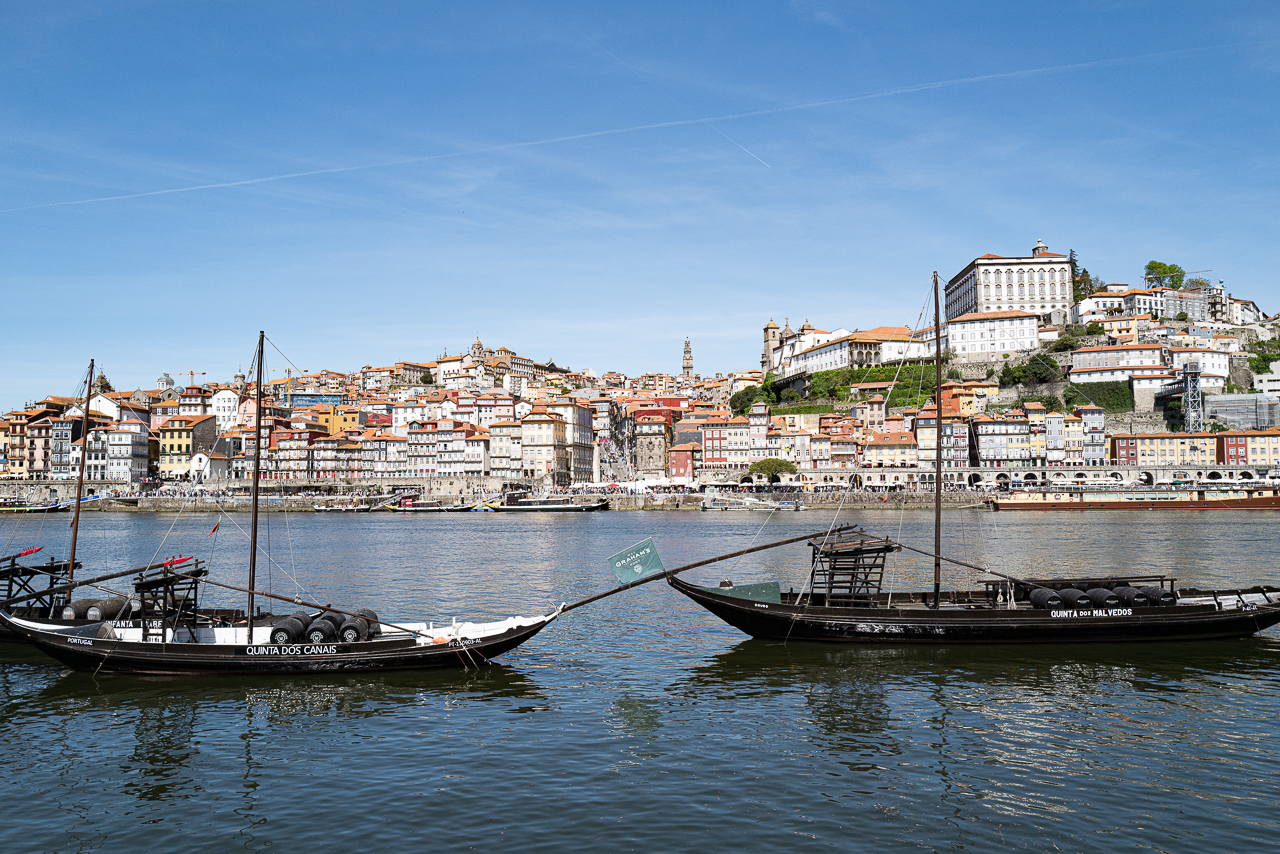
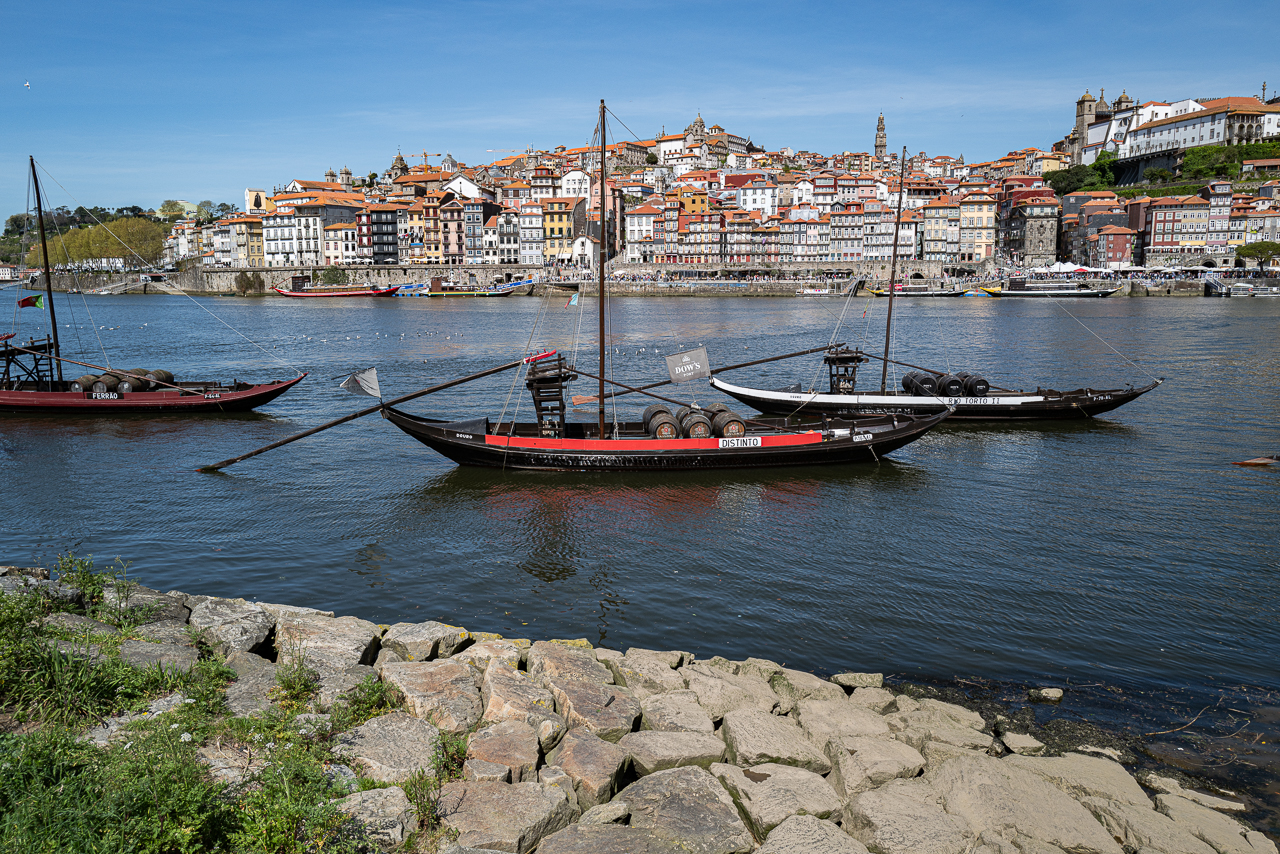
Back at the dock an hour later, it was time for lunch. We decided to walk across the pedestrian bridge under the Ponte Dom Luis, thinking perhaps we could find some lunch in Gaia. The view of Porto from the far side is the one that adorns all the guidebooks and with a clear blue sky the shot was beautiful. We walked down along the quay, passing a dozen rabelos holding Port casks.
The waterfront here has fewer restaurants than the Porto side so we walked to one end and looked at menus on the way back. Most were not expectedly chock full of tourists, and the menus were designed for that crowd – all the traditional dishes presented in photos, like in China. We came to the last place, a literal “hole the wall” that had an appealing menu. We took a seat inside between walls of rough-hewn stone blocks, no doubt standing there since the construction of the walls along the river. Only 8 indoor tables made the experience very intimate. I ordered pataniscas de bacalhau (cod fritters,) croquettes de lomo (beef loin,) and a bowl of french fries. Two nice Douro wines made the meal complete. A really wonderful and totally unexpected lunch in an amazing location. Good service, good food, who could ask for more? But, there was one more little surprise – the beef croquettes were stuffed with the Portuguese version of our favorite San Carlos dish – carne machaca. A nice trans-Atlantic gift.
 tbaroundtheworld
OMG How incredible! Love the boats, love the graffiti, love the machaca in the lovely lunch, gorgeous sights!