
Who would have predicted the recuperative powers of empanadas? Our second goal of the day, after visiting the Sé was the Capela das Almas, a church with an exterior covered in azulejos. But the sleet storm put an end to that trip even though we were close, at least for the moment. The weather improved and we were at least partially recovered from the morning trek so we had a look at the map and decided to try again. MLW was skeptical because the trip to the chapel was along the same route as the Pingo Expedition, only farther. But I turned on the charm, the “charmnado” as she calls me and off we went.
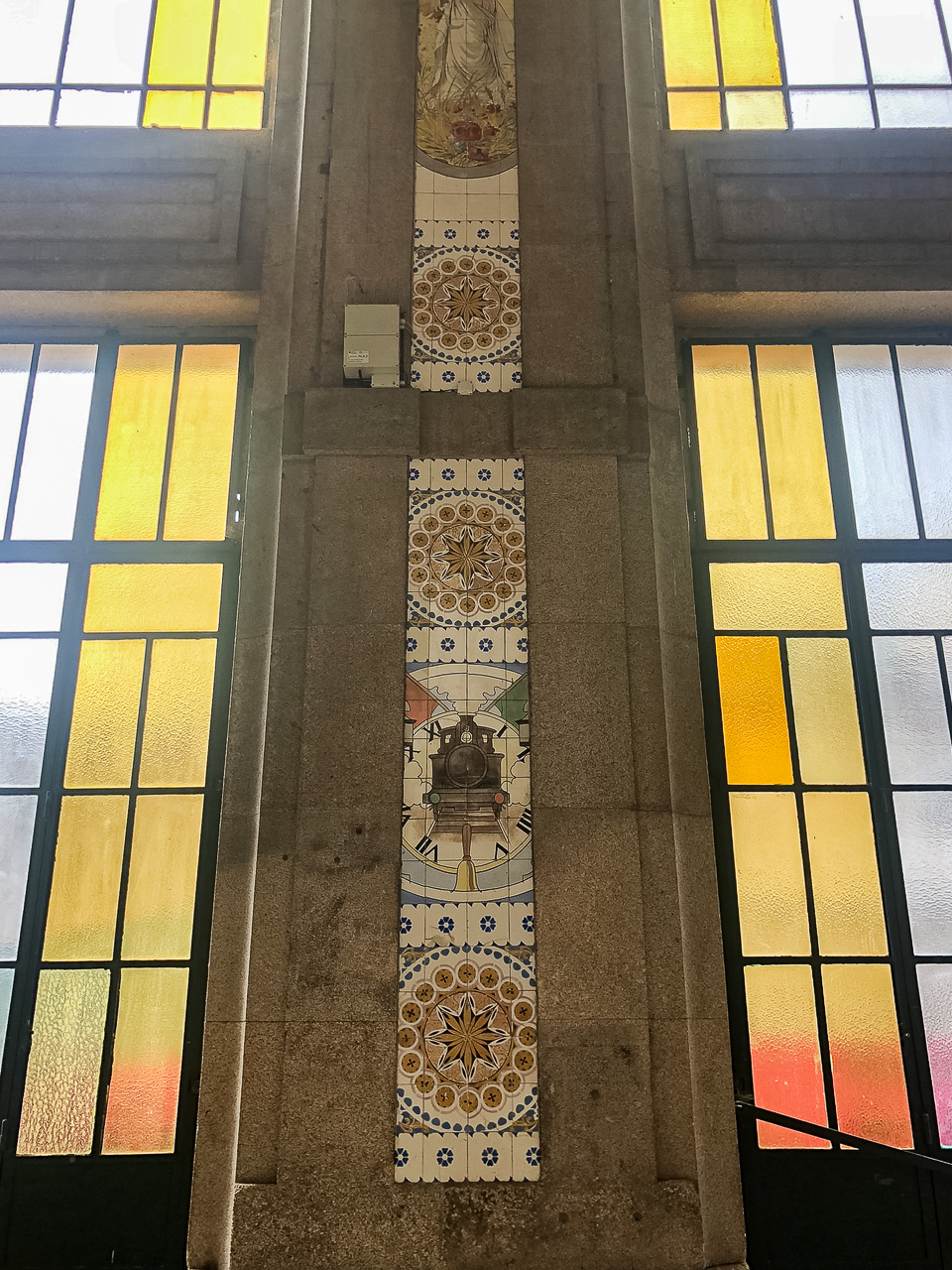
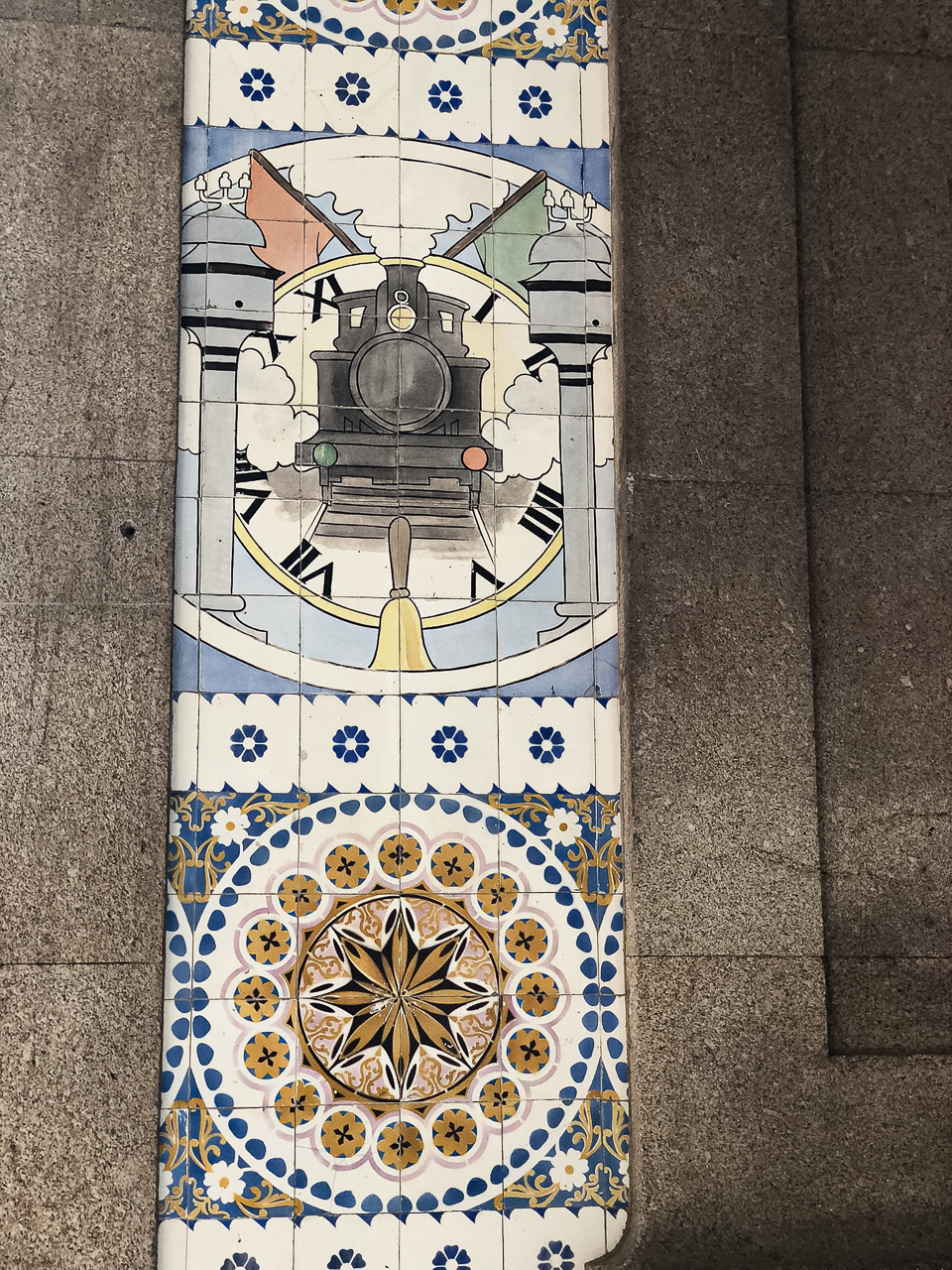
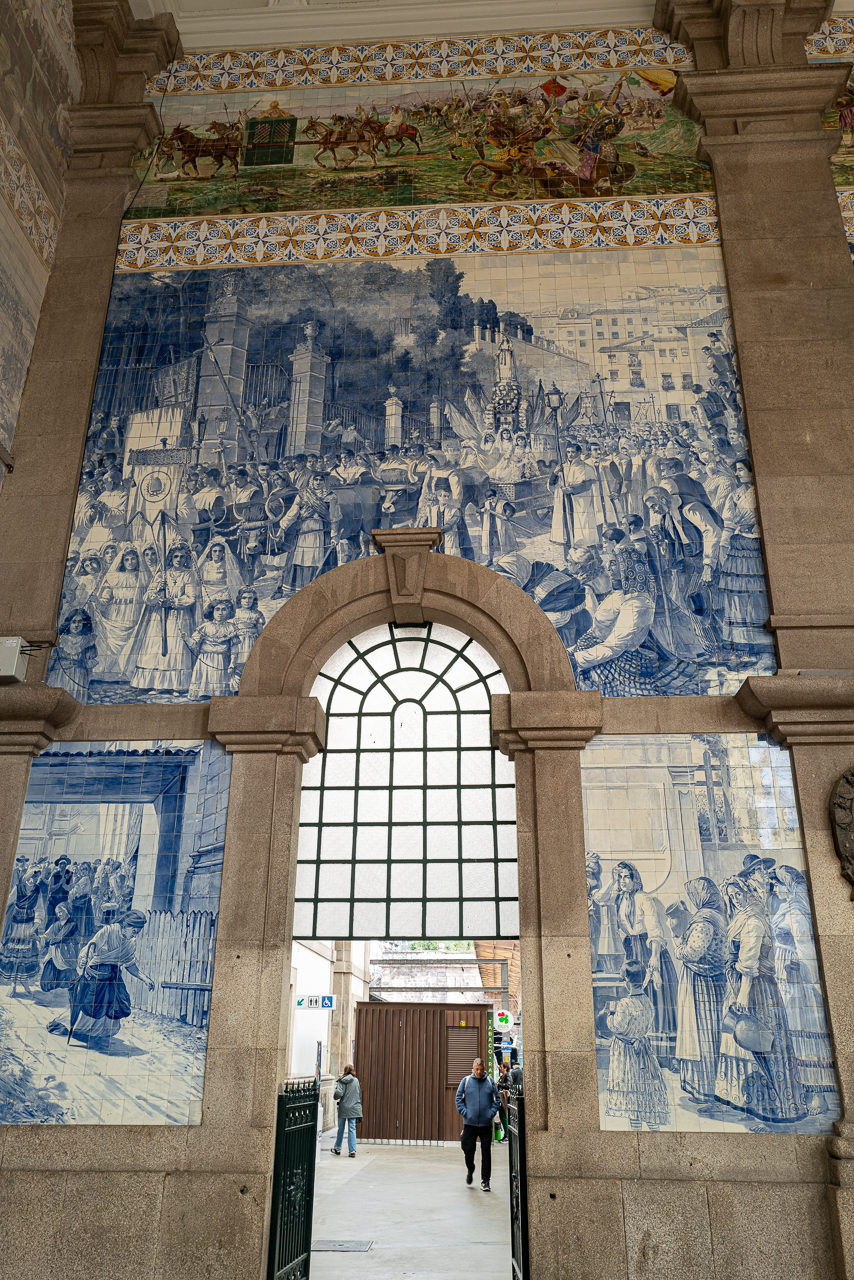
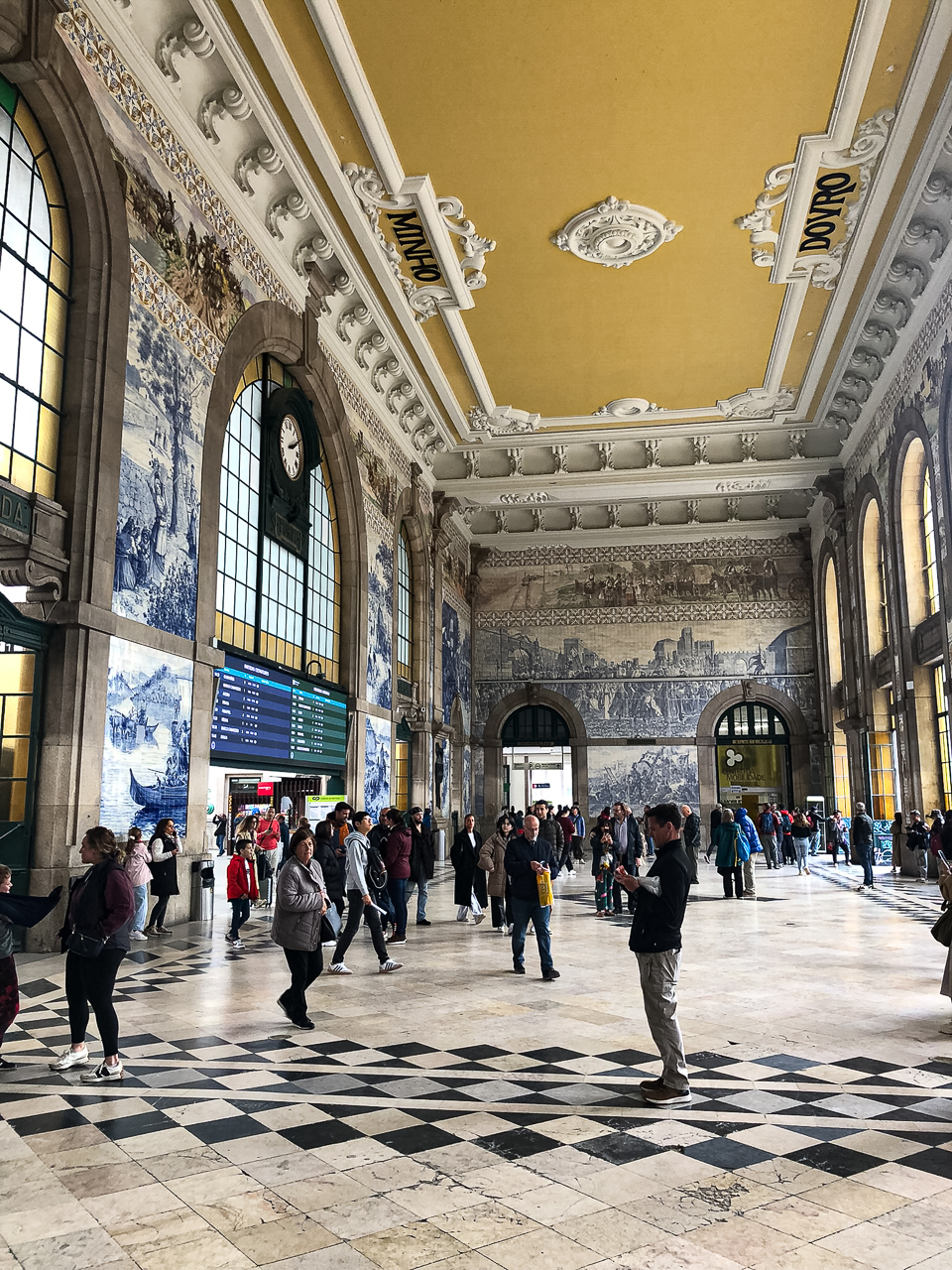
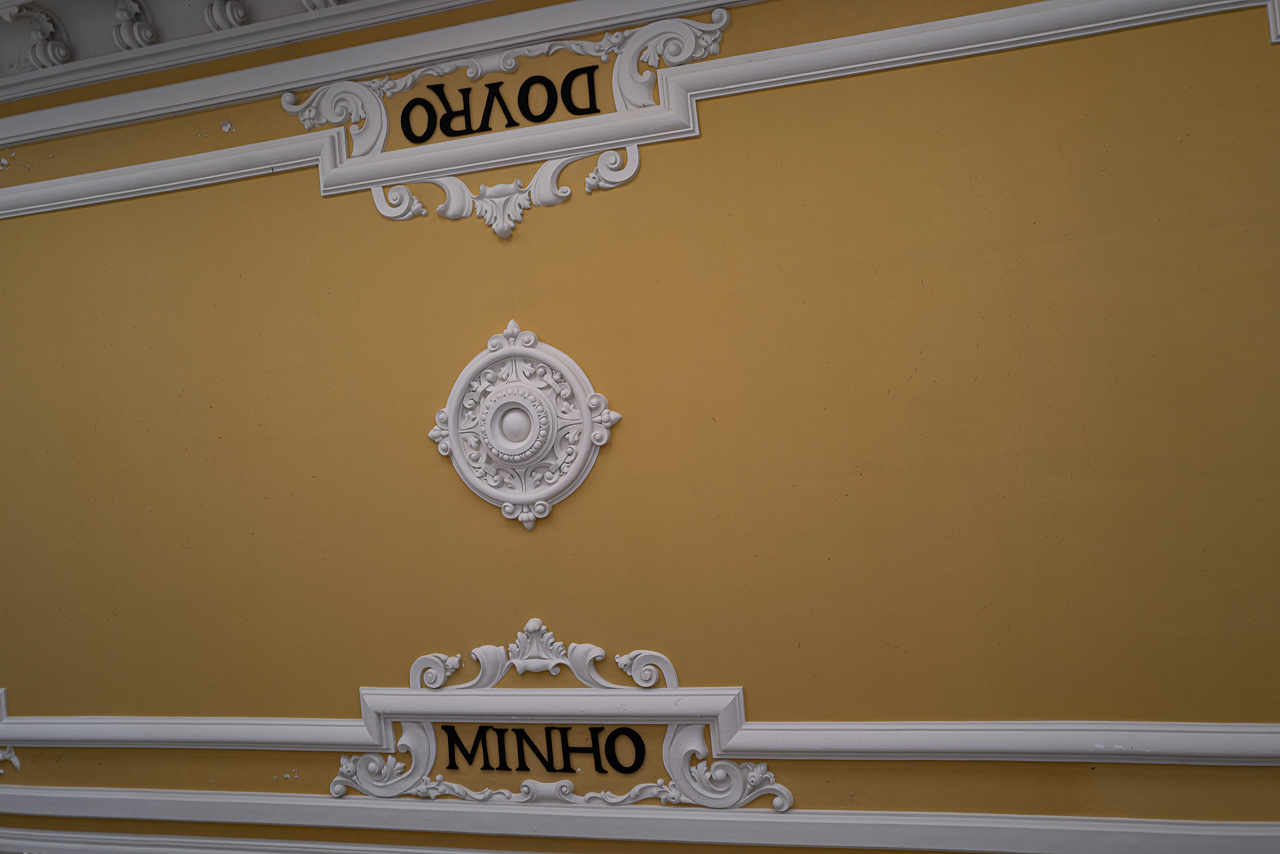
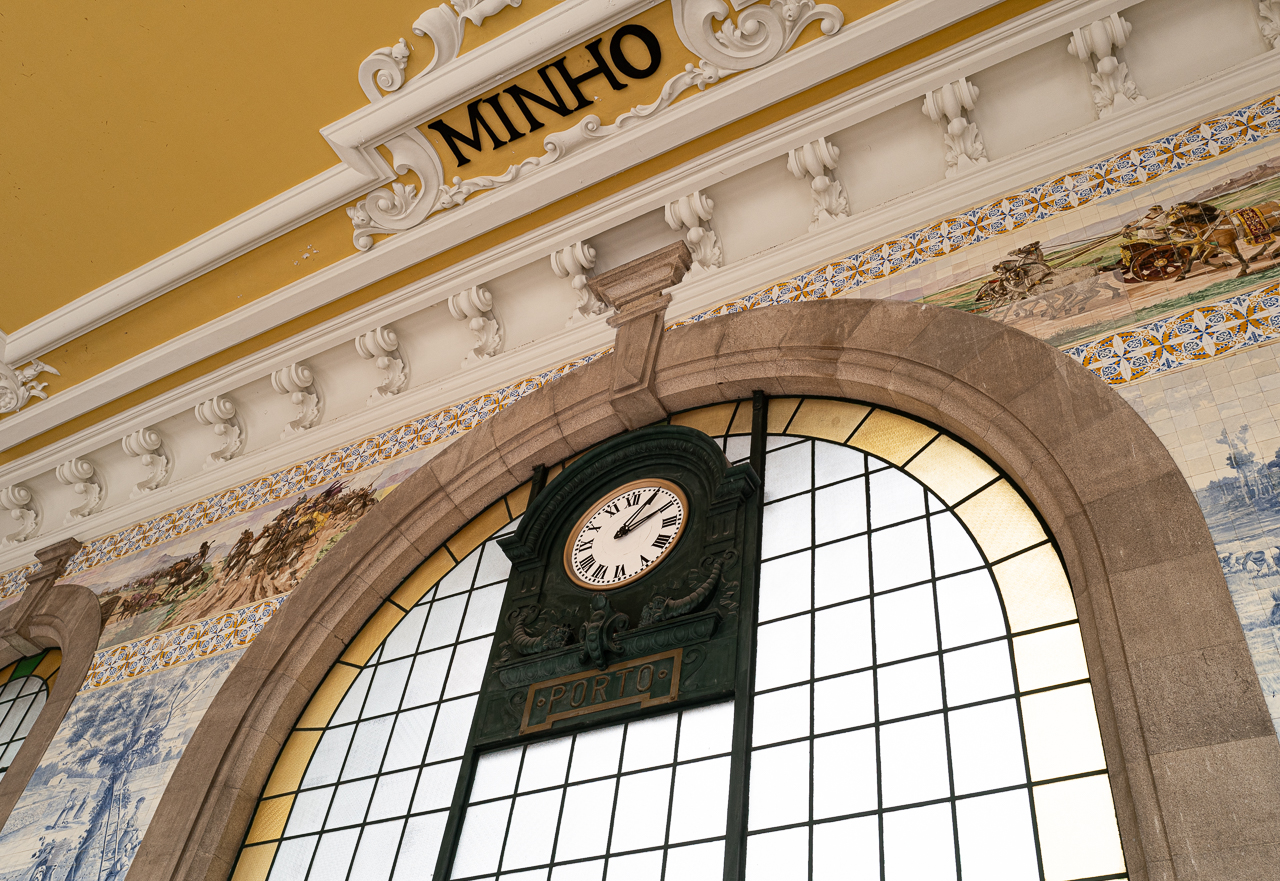
The Porto train station, the Estacão São Bento , was along the way so we braved a construction zone and ducked inside. It is known for its tile work, executed by artist Jorge Colaço for the station’s 1916 opening. Constructed in the French Belle Epoque style, it was lauded as Porto’s entry into the modern times of the early 20th century. The tile murals depict secular tales, versus the heavily religious work in and on the churches including the visit of King Dom João I in 1387 and the capture of the Muslim city of Ceuta in 1415, the latter representing Portugal’s entry onto the world stage as a naval military power. We’ve seen some amazing train stations in our travels, and the tiles in this one puts it among the best.






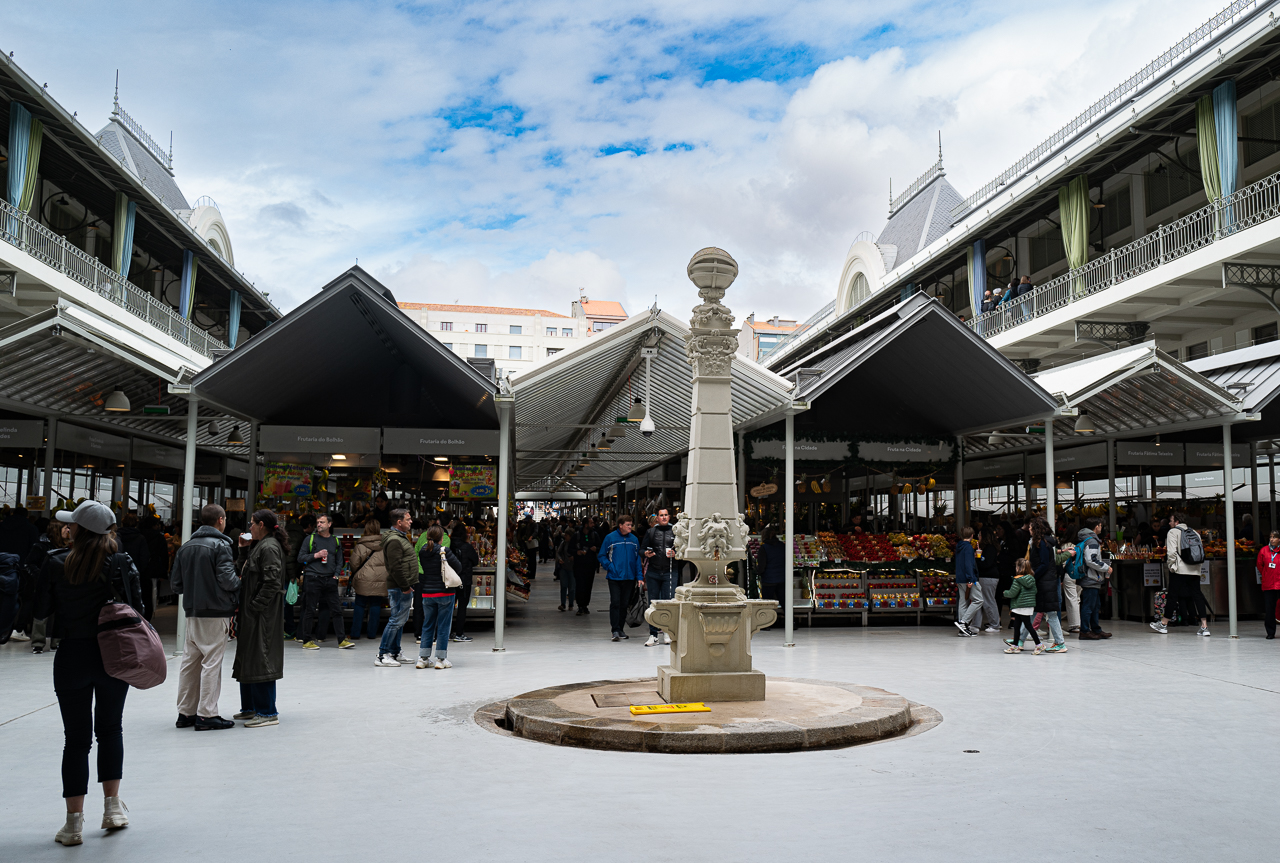
We ducked into the Mercado do Bolhão, one of those magnificent covered markets that I wish we had at home. Fresh food, wine, pasta, pastries – everything and anything you could want. We stopped to watch a guy making Fettucini Alfredo by dumping hot pasta on a wheel of parmesan. It was quite extraordinary. This market easily competes with the more famous Boqueria in Barcelona.


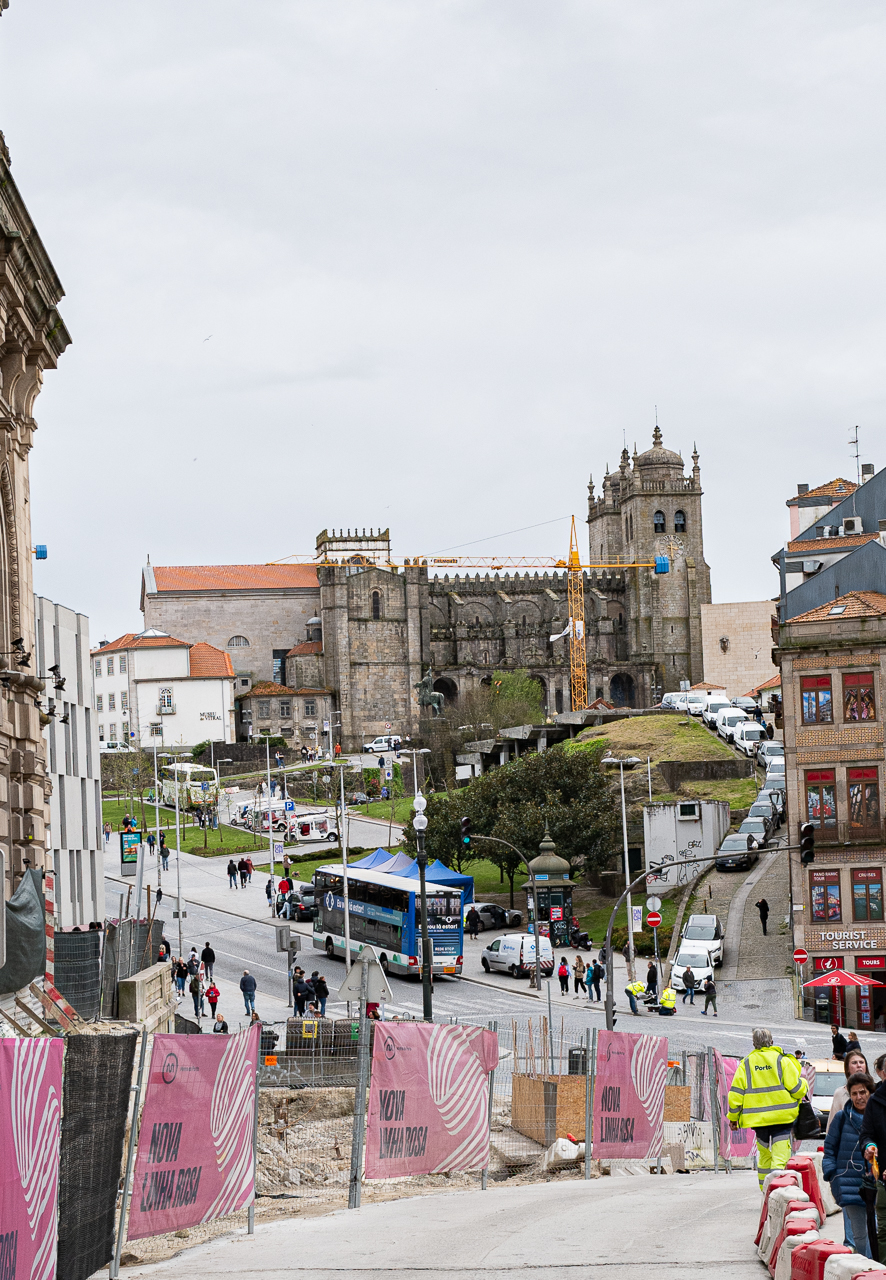
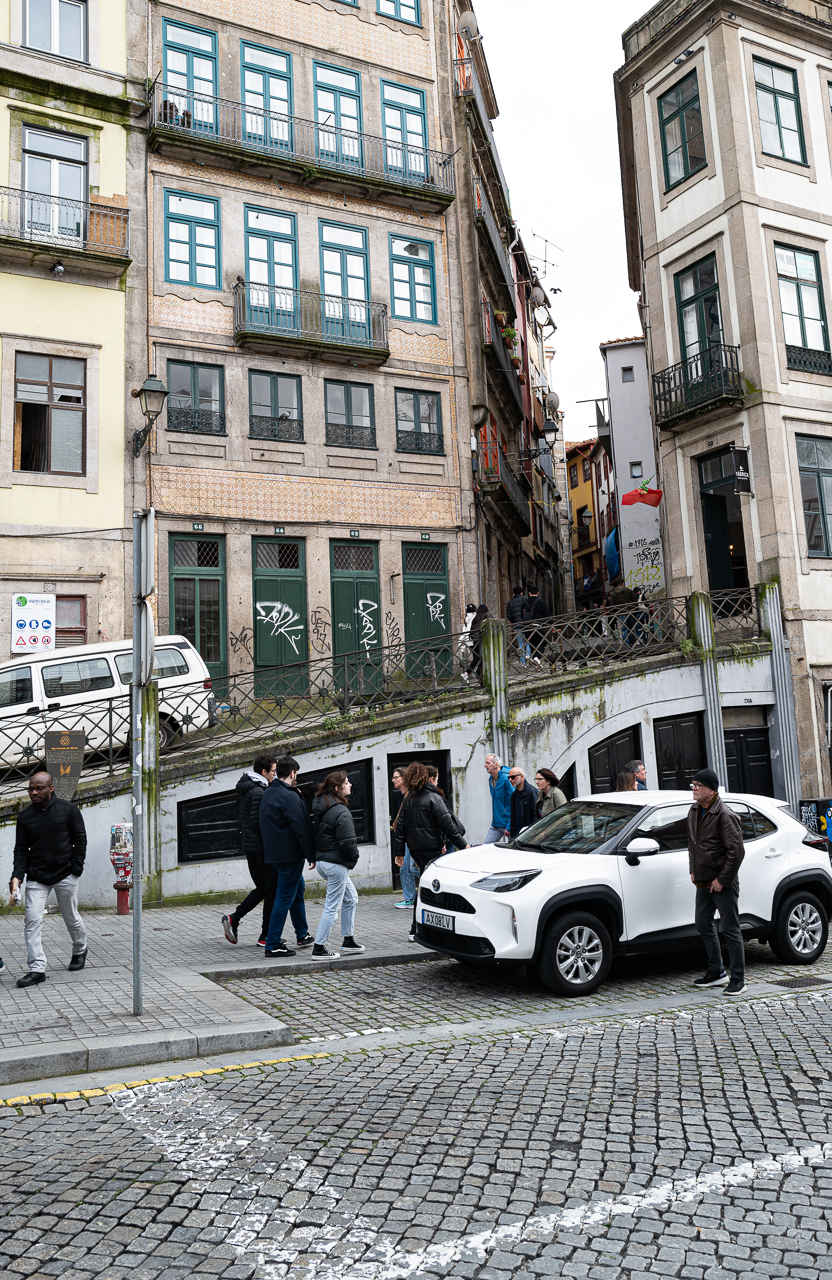
This uphill trip taught us a very valuable lesson about walking around here. First of all, avoid the old streets – there is always an alternative to get where you’re going via streets with a gentler grade, even if it means walking a couple of extra blocks. The net result is better on your body and your relationship. Today, retracing parts of the Pingo trip, we realized we could have bypassed some of the gnarlier sections by sticking to the main streets and by not following Google Maps which clearly errs on the side of distance and not on the discomfort level. Secondly, slow and steady saves the day. The pace that we use every morning at home is too fast for going up a 45° slope. We arrived at the Capela das Armas feeling pretty good. Far better than our arrival at Pingo yesterday.
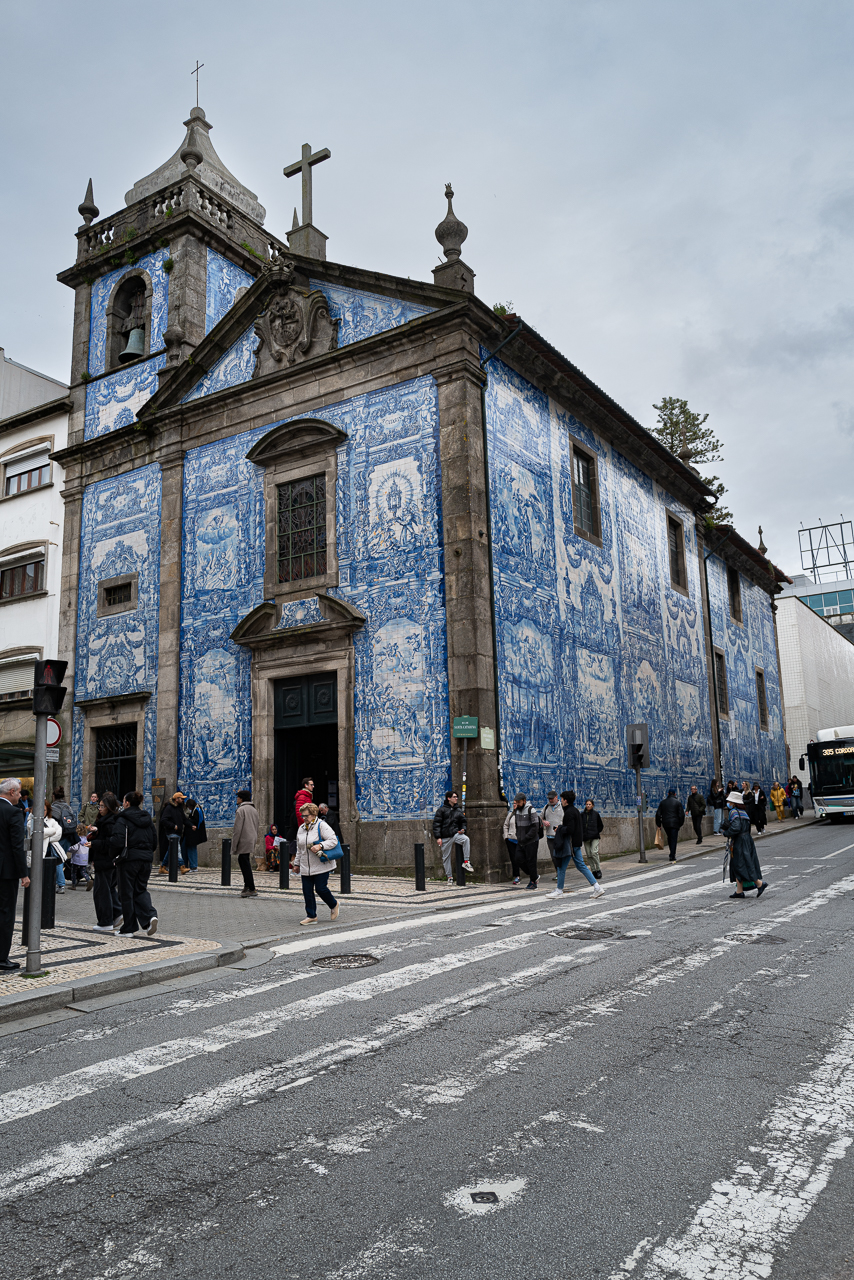
The Capela has its roots in the early 18th century but its signature tile exterior was added during a renovation in 1929 by the artist Eduardo Leite. Part of the church depicts the life of Saint Francis and the other the martyrdom of Saint Catherine of Alexandria who was killed by the Roman emperor Maxentius in the 4th century. Joan of Arc claimed that St. Catherine was one of the saints who counseled her. Its location in a busy shopping area is a bit incongruous but that doesn’t diminish its stunning exterior. After a quick look inside at the modest interior, we went around the corner and had coffee at a neat little shop, the Porto Coffer Lab.
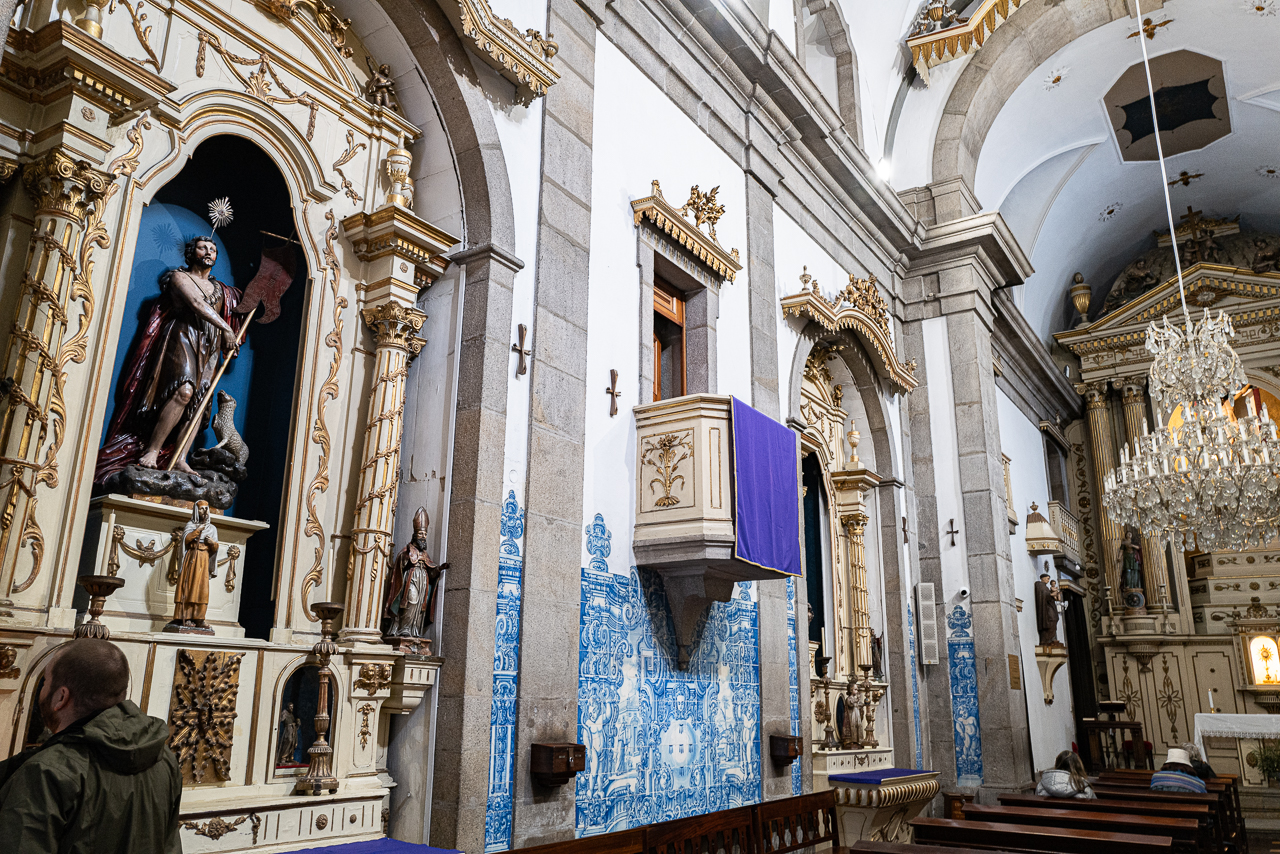


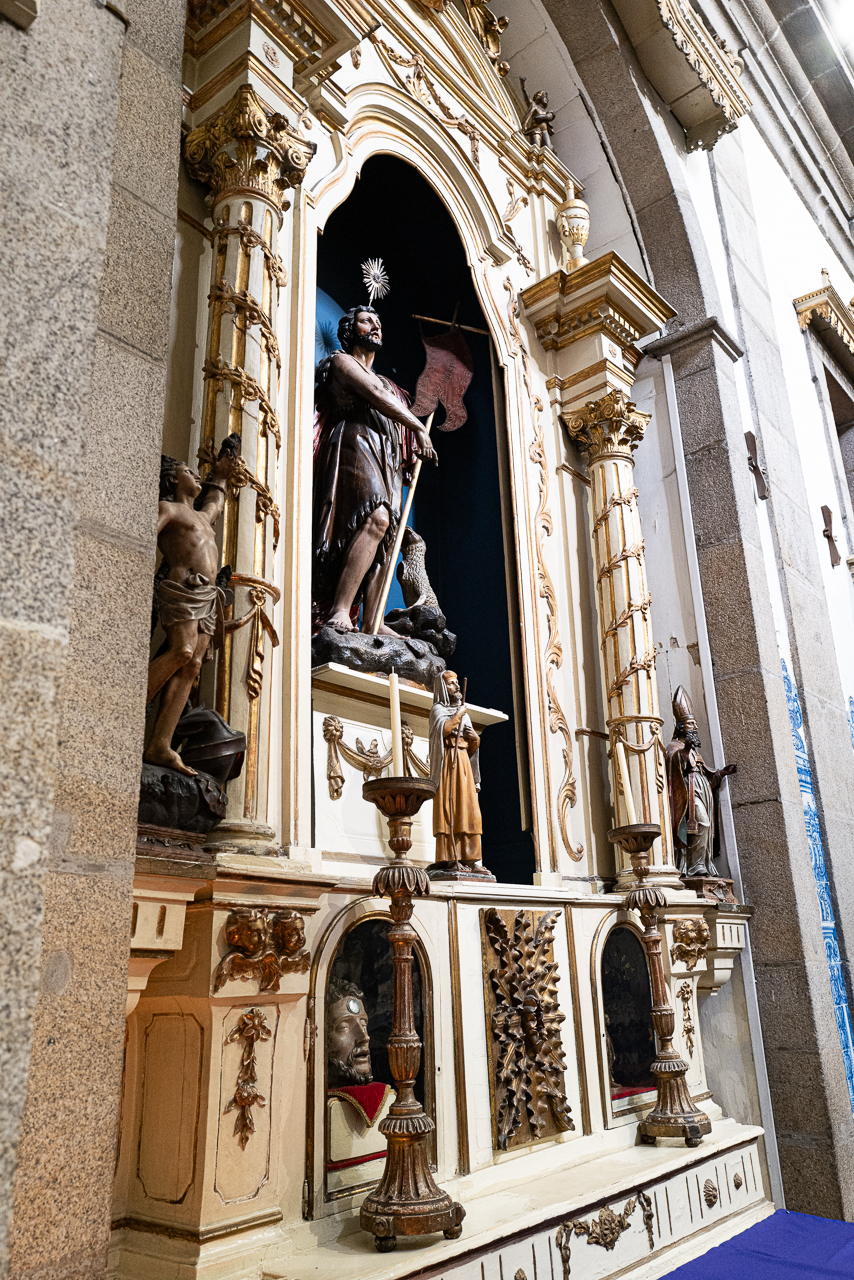
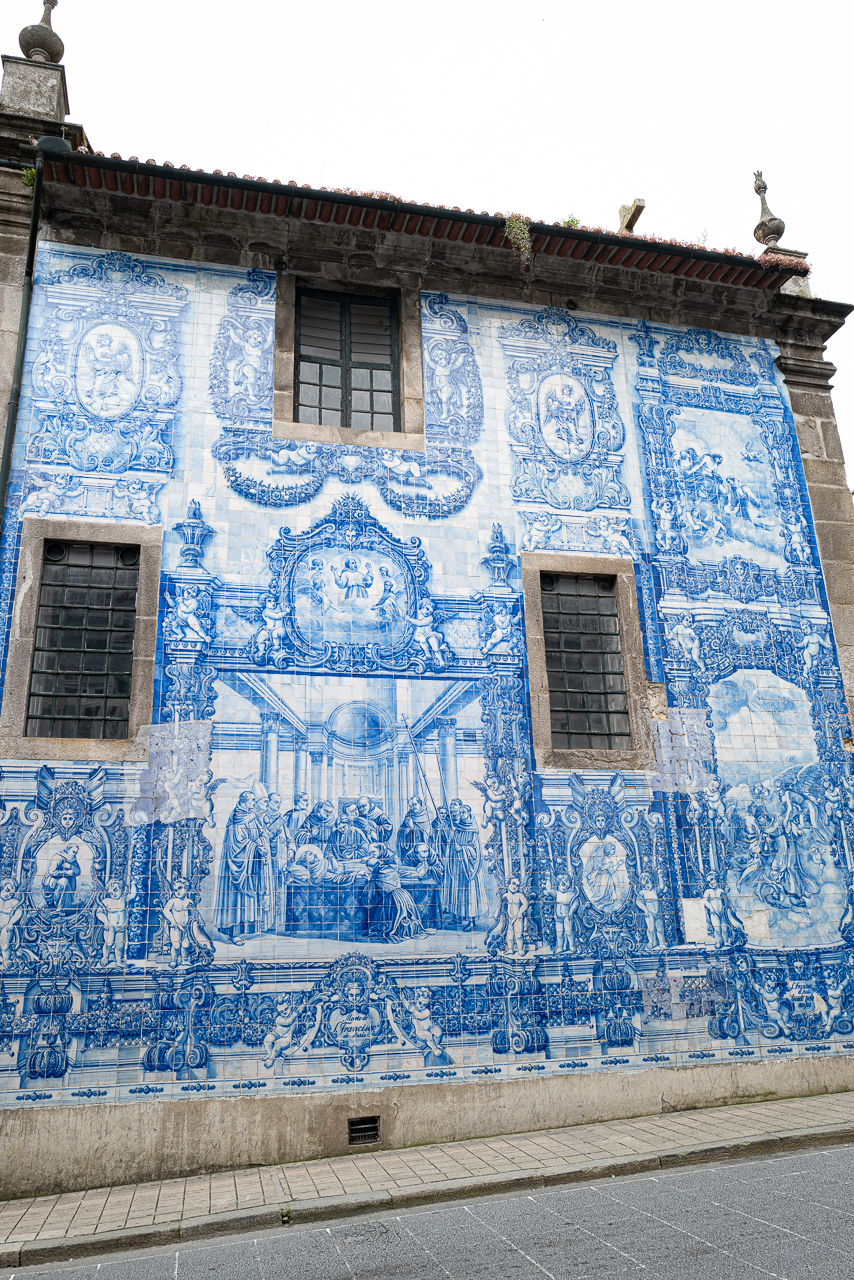

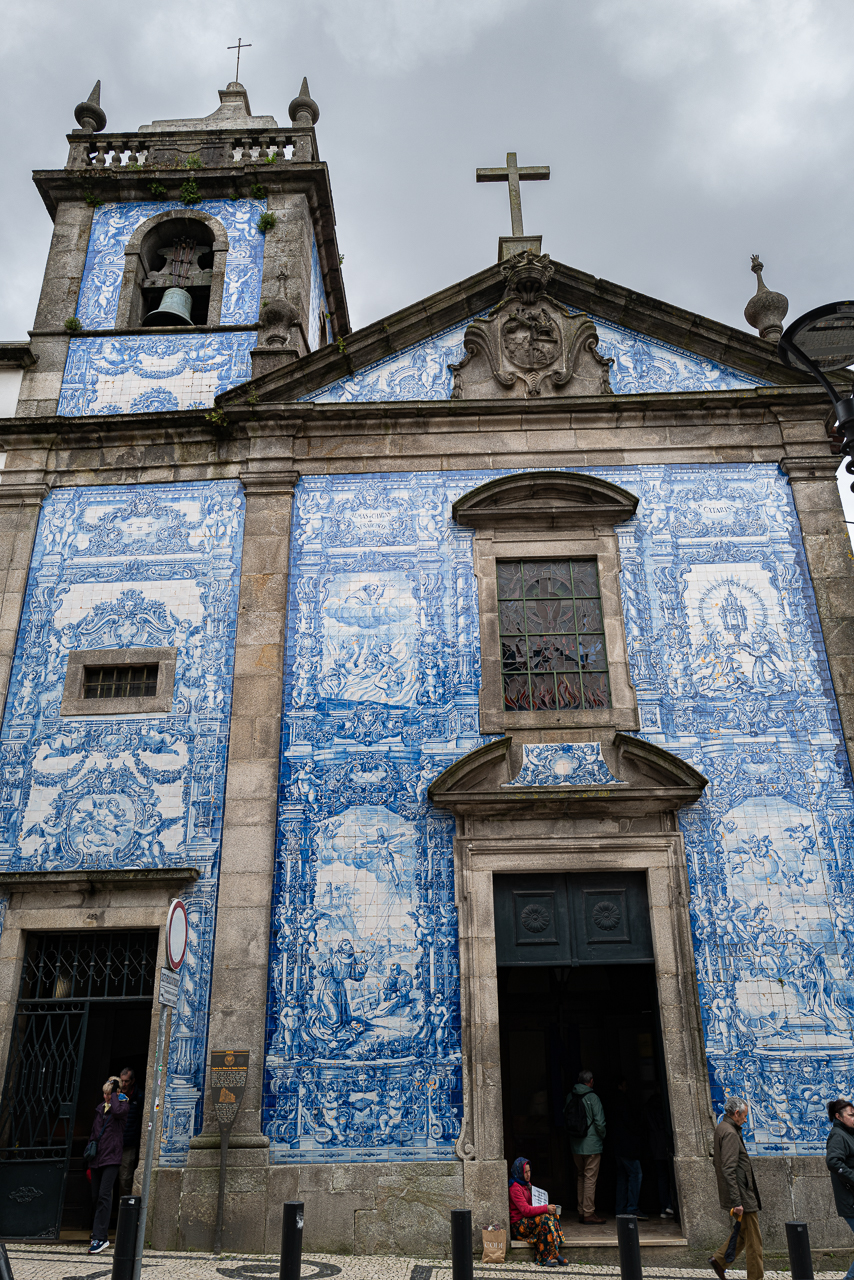
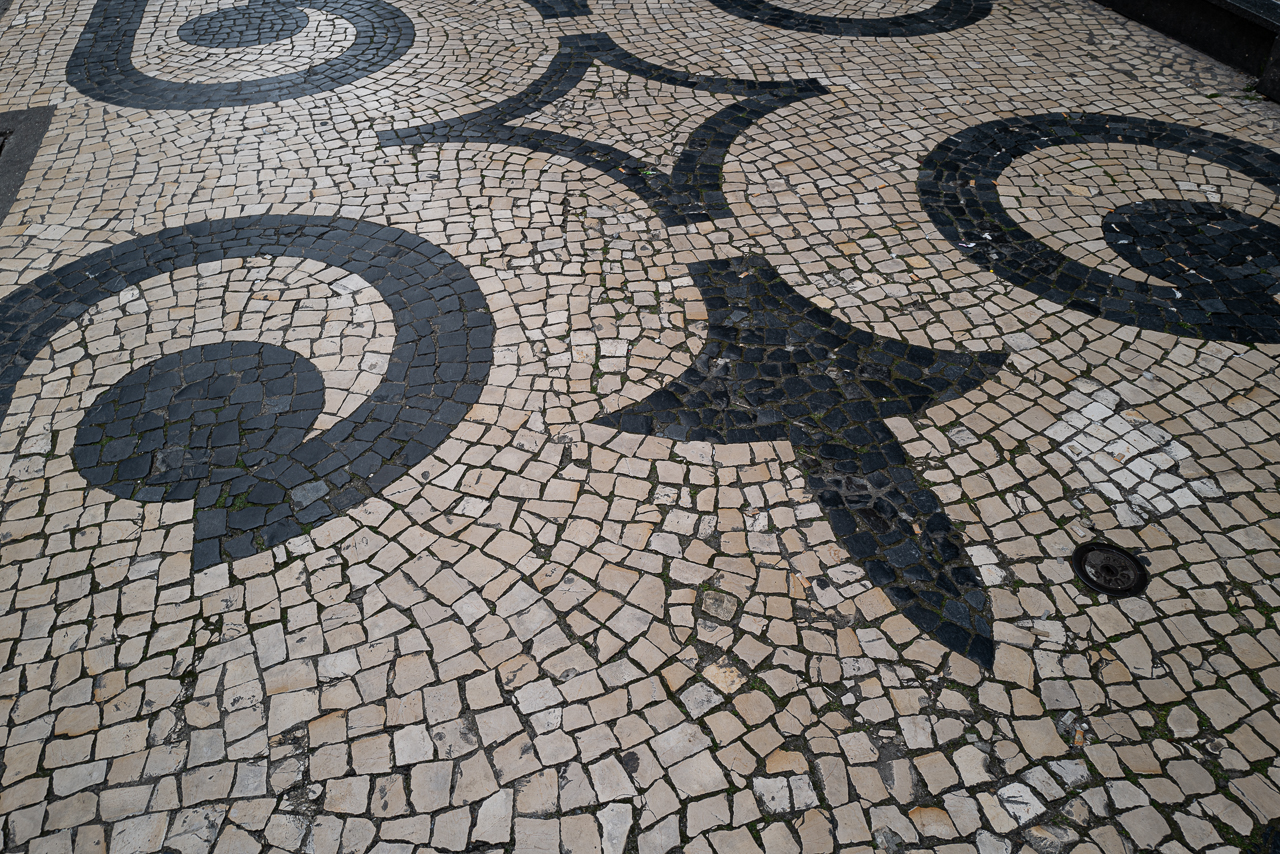
We walked home along Rua de Santa Catarina, lined with food and clothing shops. The sidewalks were done in Lisbon-style, expanses of white limestones decorated with designs done in black. This was one of those “feast for the eyes” pedestrian streets that are common in European cities with lots to buy and lots to look at.

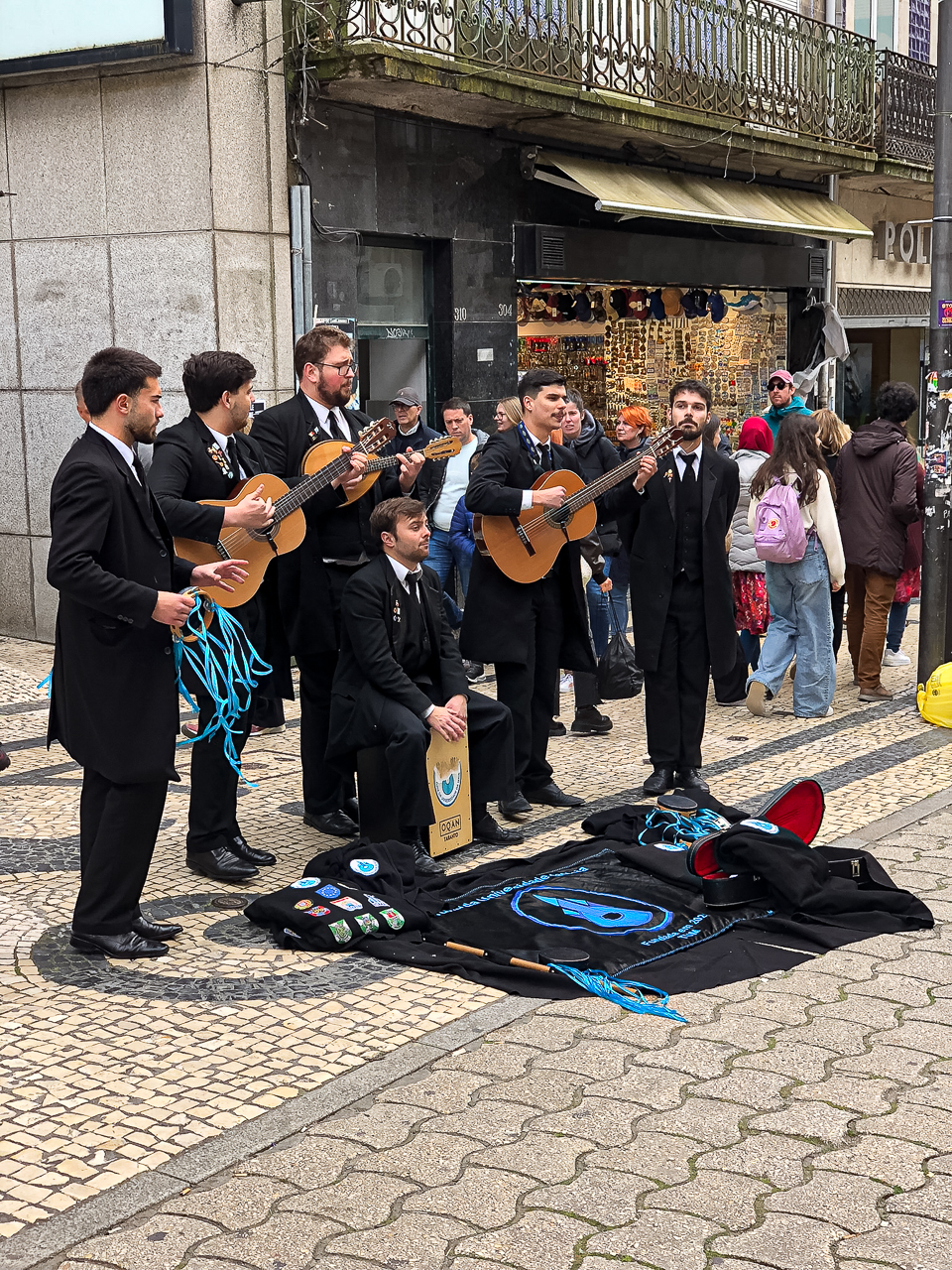
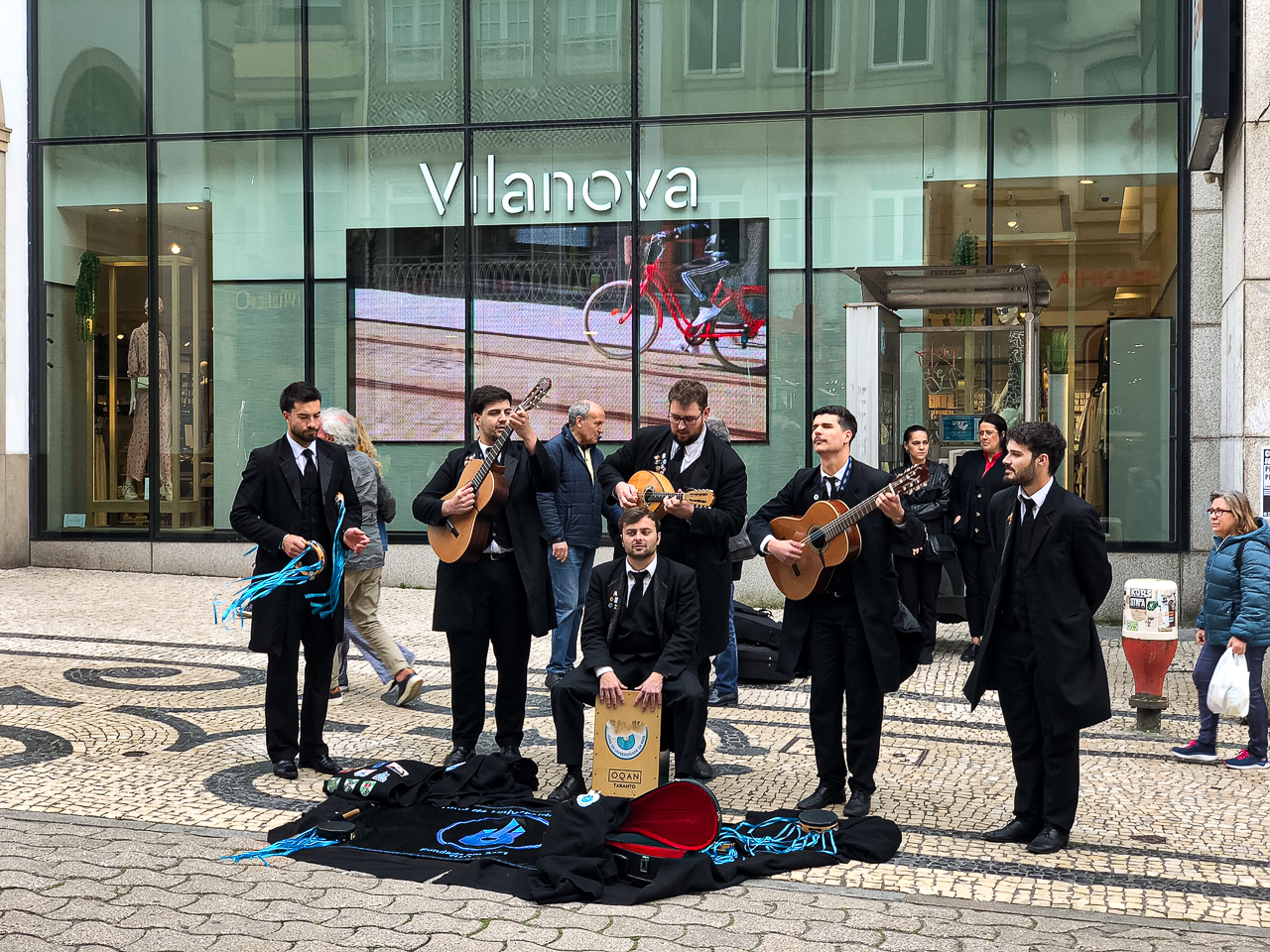




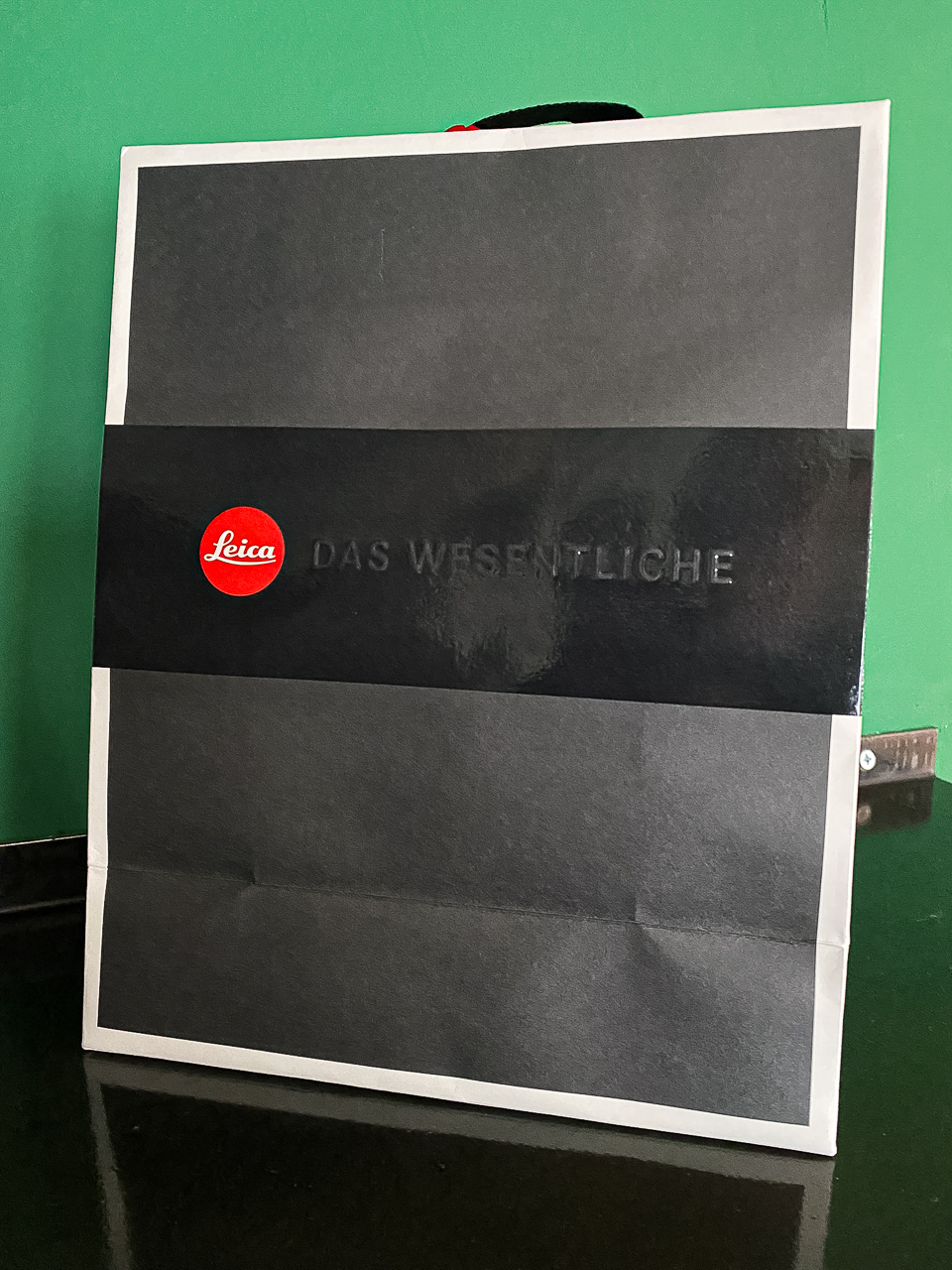
About halfway home we crossed the street and found a Leica Boutique. Being an owner/user I have always wanted to visit one but the closest one to our home is thousands of miles away. We stopped in and had a nice chat with one of the proprietors. The store was beautifully sleek and modern with a Leica gallery, a display of historical models and things to buy. He asked us how we liked Porto, we mentioned the crowds and he said the rest of the city is not as busy, that down here in the old town it’s mobbed because everything there is to do in Porto is clustered in a very small space. I wanted to buy a camera, but settled for a hat.

And just for illustrative purposes, here are a couple of photos about the hills we face. It’s hard to get a photo that shows the slopes, but these two do a decent job.
 tbaroundtheworld
I have three main takeaways from this blog:
Also, the settler style imagery is fascinating and so similar to our own. In photo #739 is that a chariot race depicted at the top? (tip top in color above the blues)
Very impressive the train station, market and streets. Worth a trip in any case.
>