
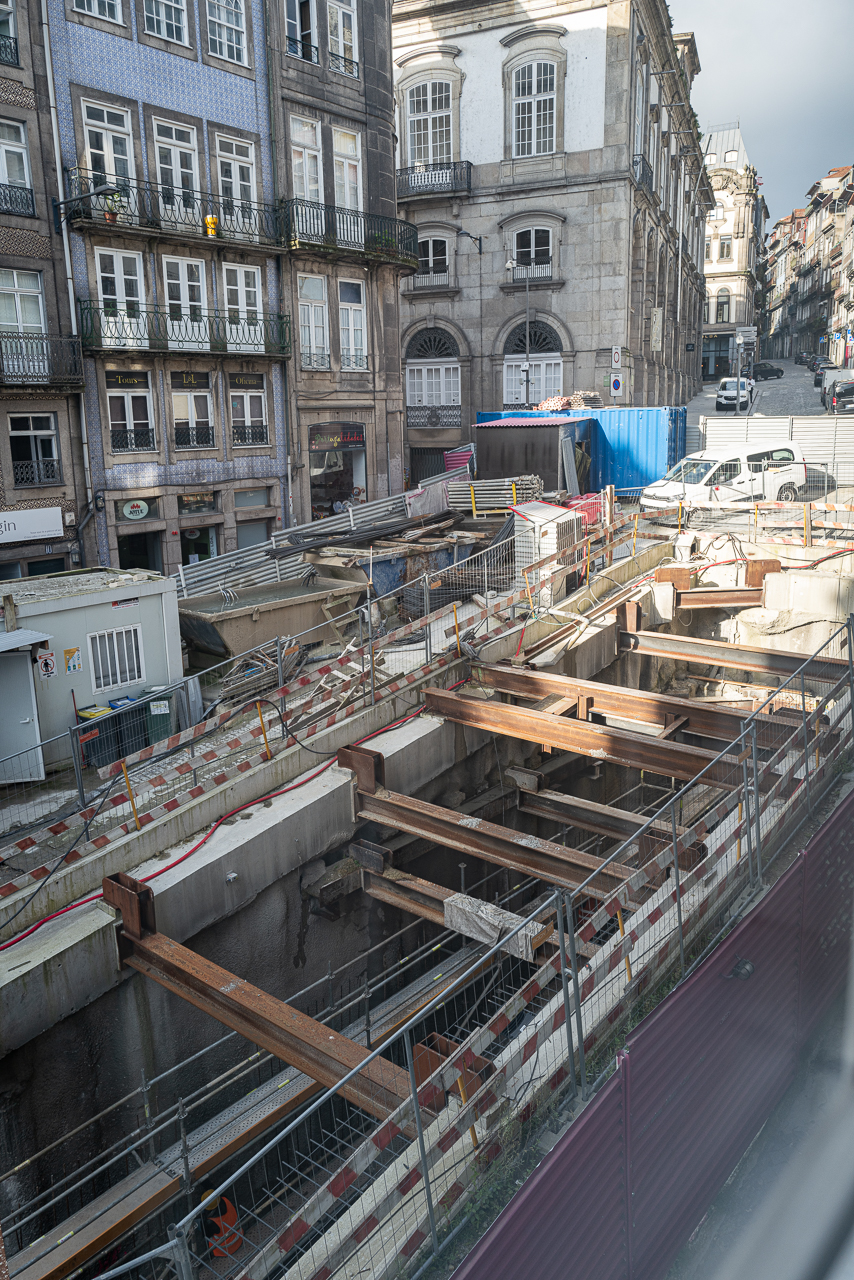
A few months ago, I went to Google Streets and took a look at the neighborhood where we’d be staying. Aside from the streets that appeared to drop off into space, there was a huge metal wall right outside the door of the apartment that was blocking some sort of construction project. The photos on Google could be a few years old or from last week. There is no way to know. When we arrived on Saturday, it was clear that the photos were on the newer side – that big wall was there. The project is part of an upgrade to their metro system, the Linea Rosa, and the view from upstairs was quite impressive. No one was working on Sunday, so there was nothing to complain about aside from some drunk who was yelling and pounding on the metal panels in the wee hours. It was different this morning when some workers started beating on the girders at 7 AM. Suddenly I realized why the rental company had left two packages of foam earplugs on the nightstands.

We started today at Starbucks which by pure dumb luck was only 1/2 a block up the incline on our street. The weather had changed from yesterday – while still sunny it was much colder. More what you would expect on a March day. We went for hot drinks instead of our regular iced order and I pulled out my phone to plan our work up to the Sé de Porto, the city’s Romanesque Cathedral. It goes without saying that the direction was up and so fortified by coffee and that standard Starbucks lemon poundcake, we left the shop, turned right, and climbed up an alley which, adding insult to injury, was topped with a long flight of stairs. And that’s where Google Maps failed me again. We turned right, following the little blue dots, and then turned left. I was bothered by the direction we were heading, and while I’m no expert on where things are around here, I did have a reasonable idea of the location of the cathedral. When we arrived at the entrance to the tunnel that is down by the riverfront, I knew we were doomed – we had no choice but to turn around and go back up all those hills we’d just descended.
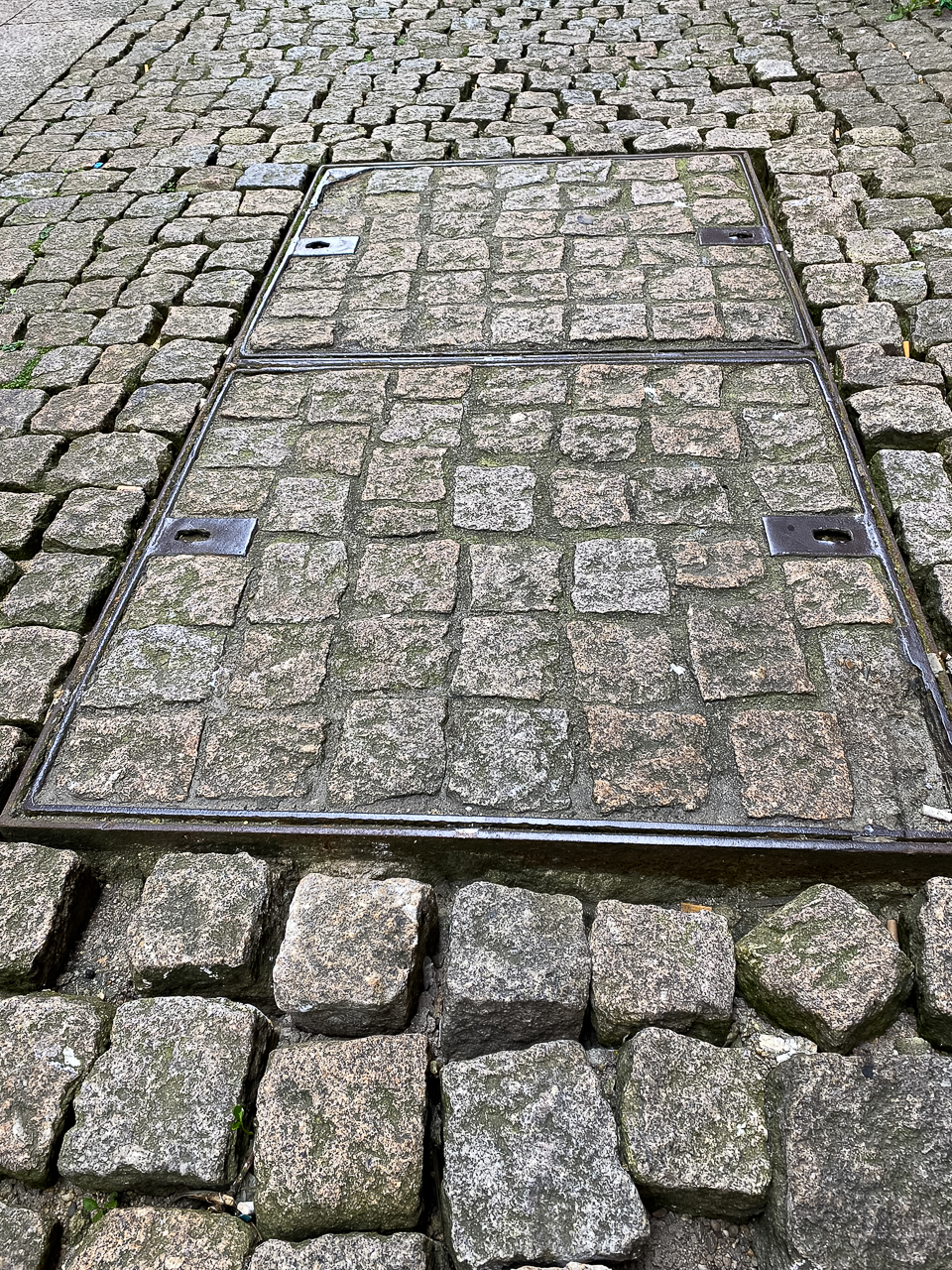
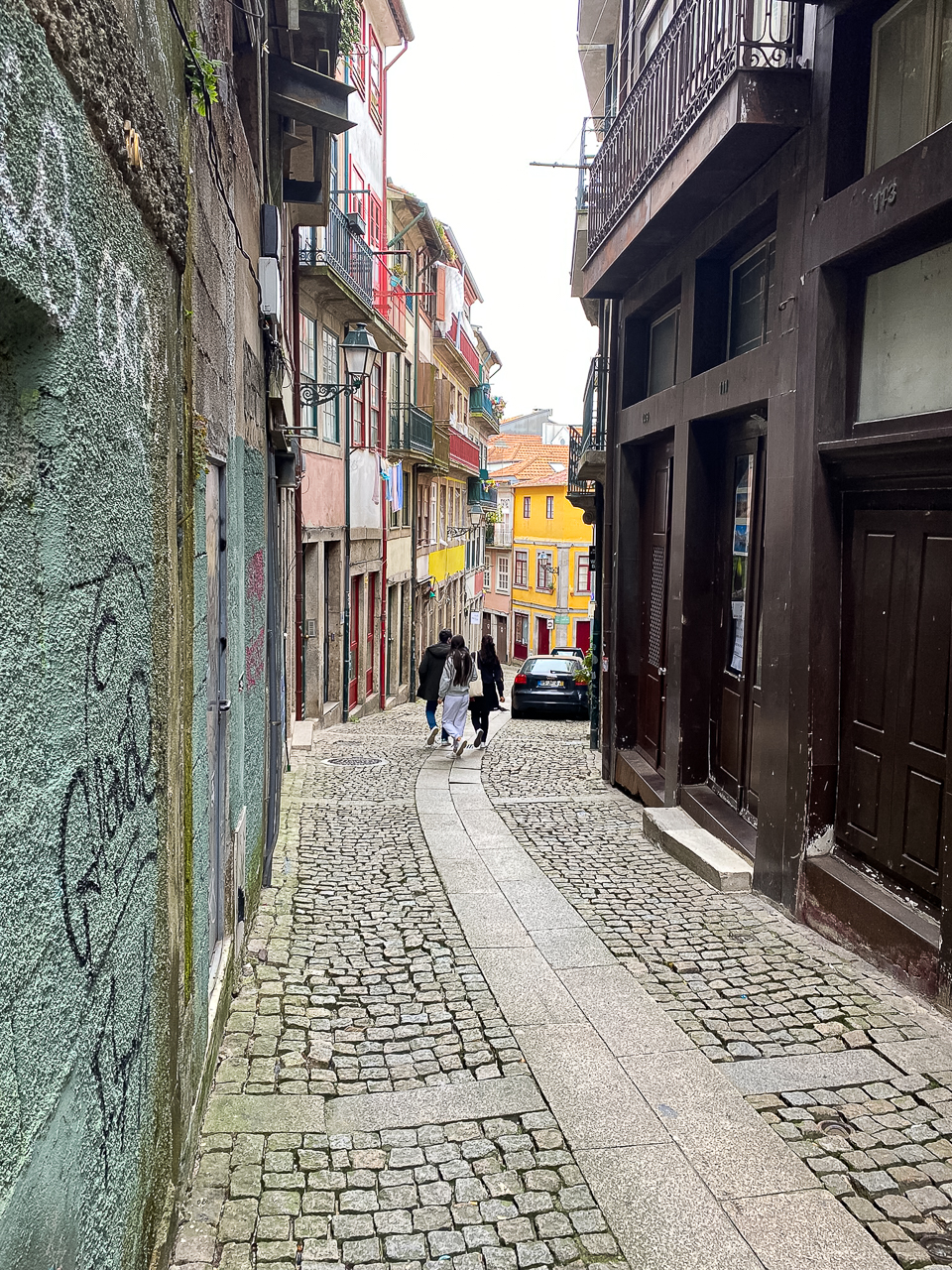
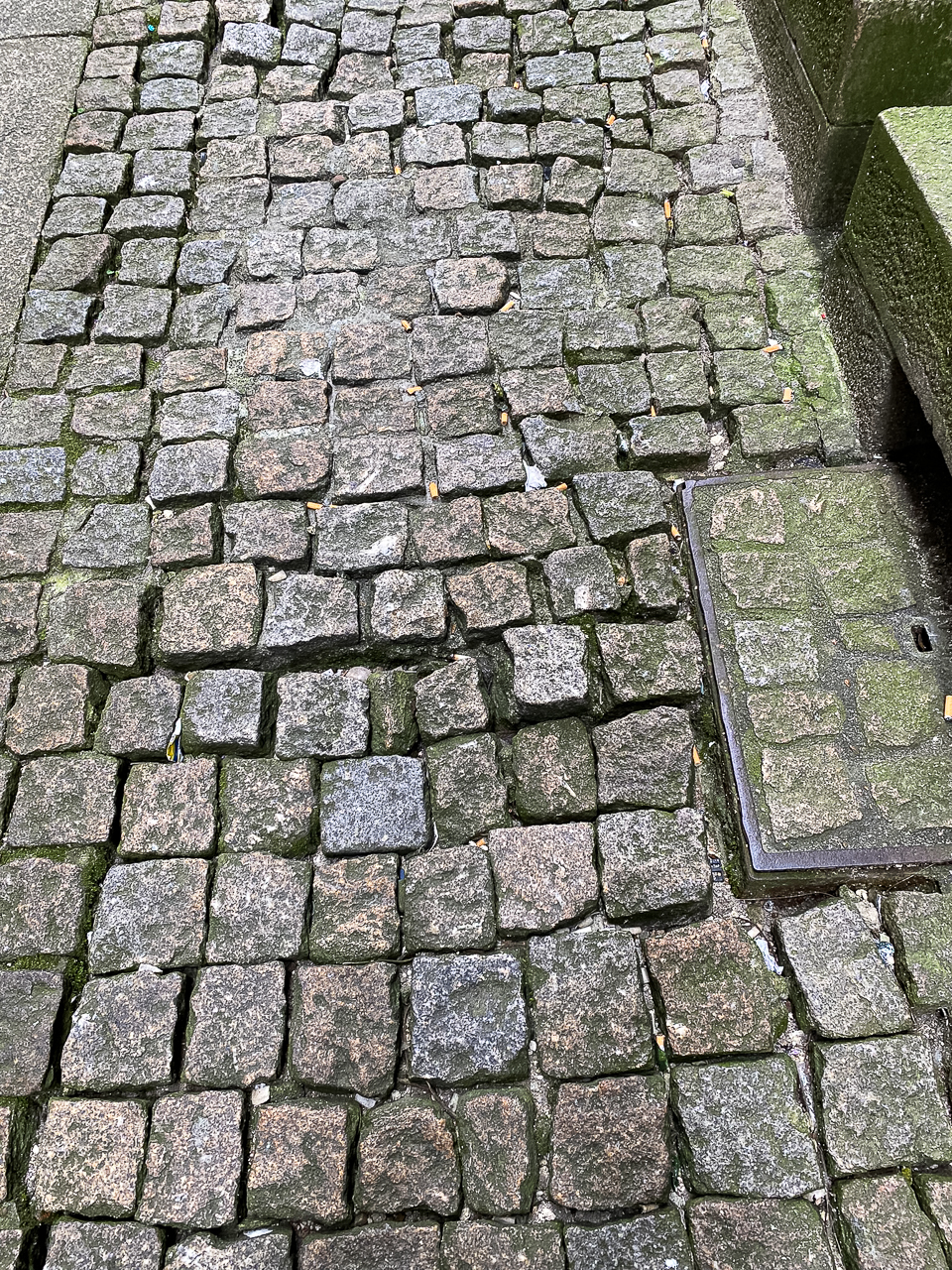
Back on the right path, we climbed and climbed and climbed, stopping to take some photos of the condition of the street so that no one would think that we’d been exaggerating. This is not a place for people concerned with turning an ankle. Finally, the street leveled off at the base of the cathedral, right at the bottom of a hundred more steps. I figured there had to be a better way so we kept on going around the front of the church and followed a slight incline up to the plaza by the entrance. At that point, out in the open, the wind picked up and it started to sleet. We were instantly soaked.

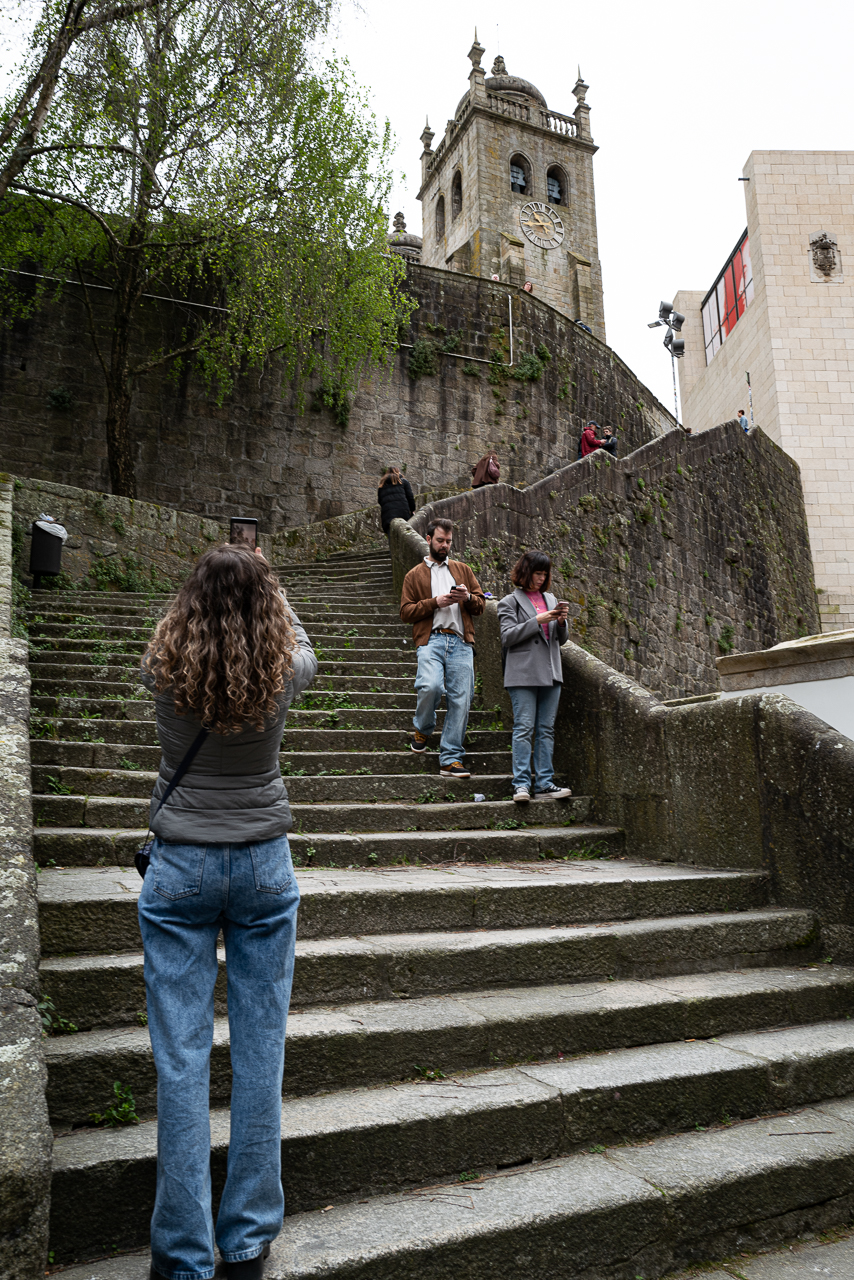
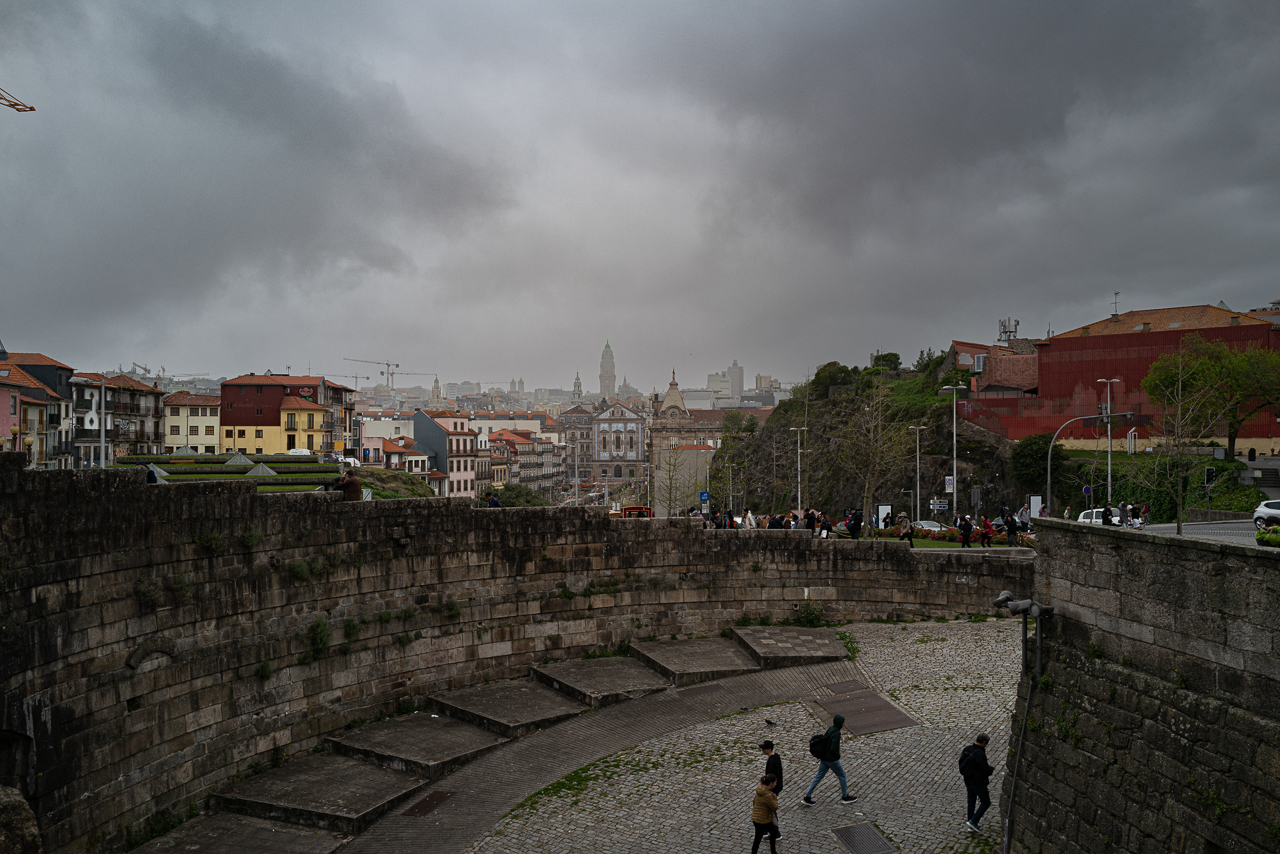
Of course, we’d checked the weather forecast before leaving, and it said “no rain” so I left our umbrellas behind. Given the wind, I doubt the brolly would have survived – it was howling. Thankfully the entrance line was very short and it only took a few minutes to get inside and out of the downpour.
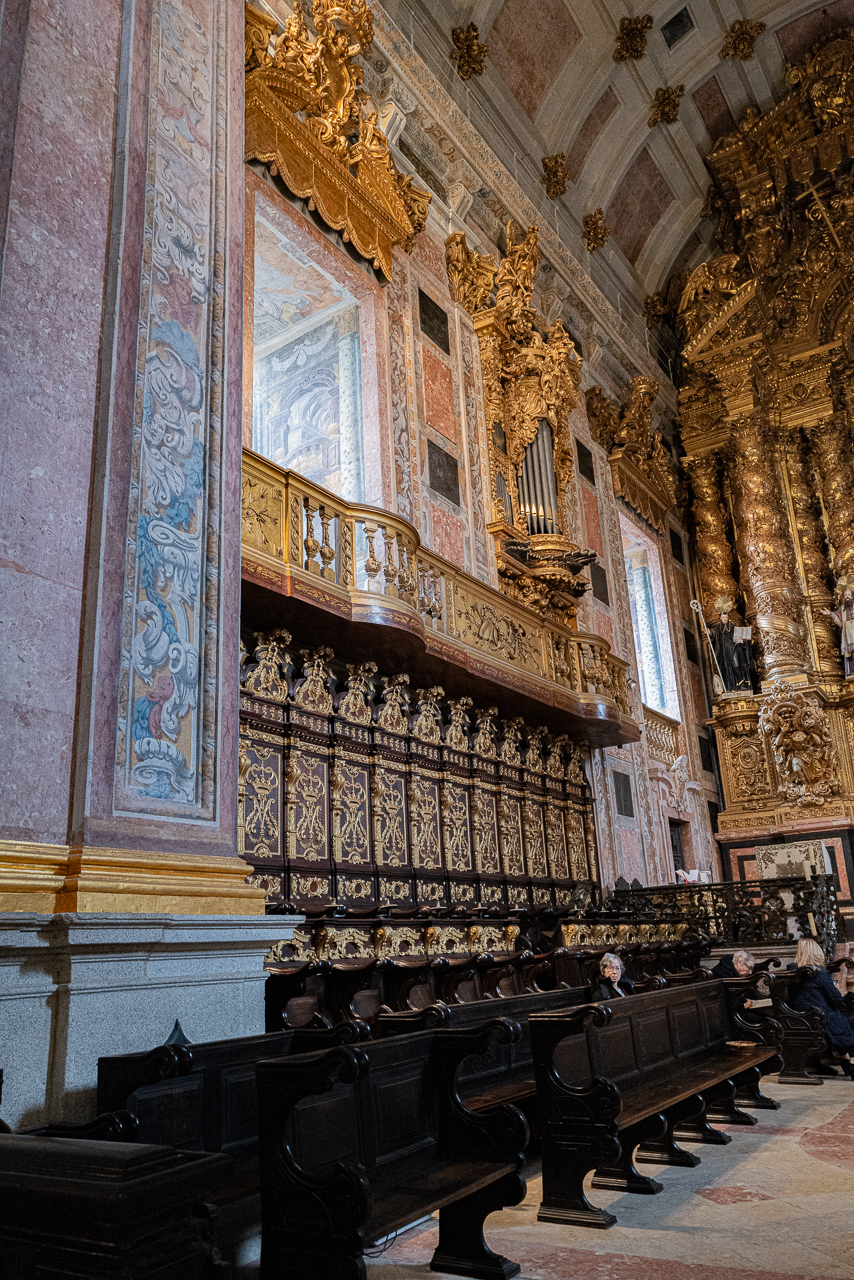
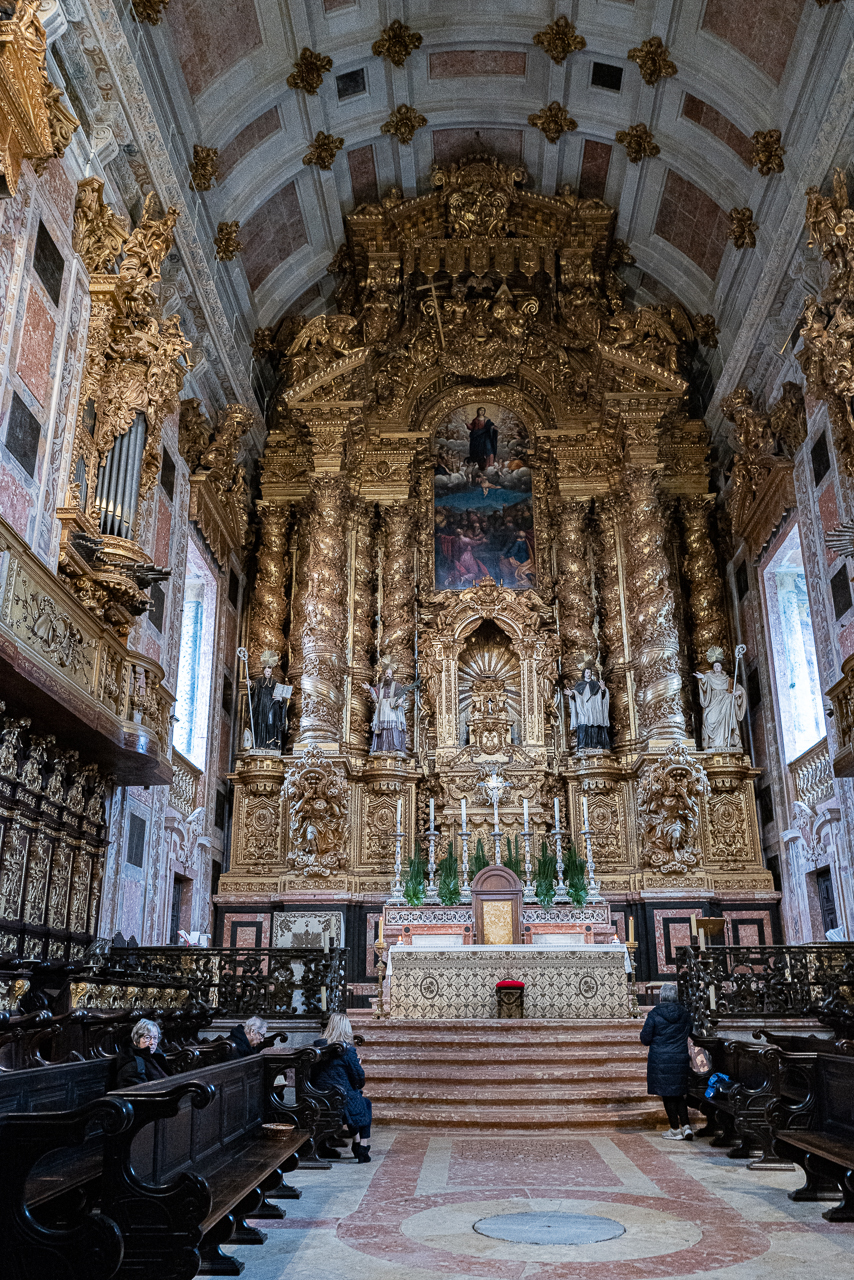
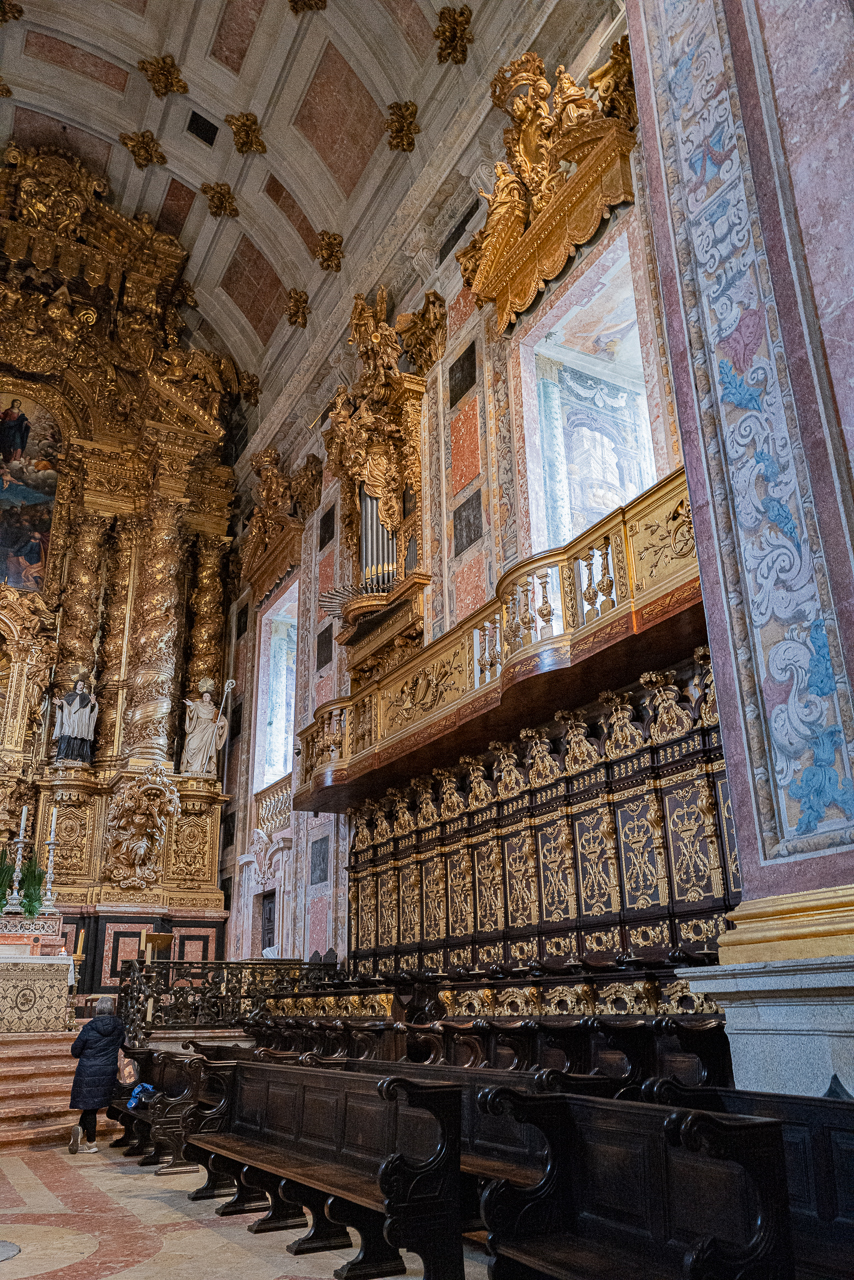
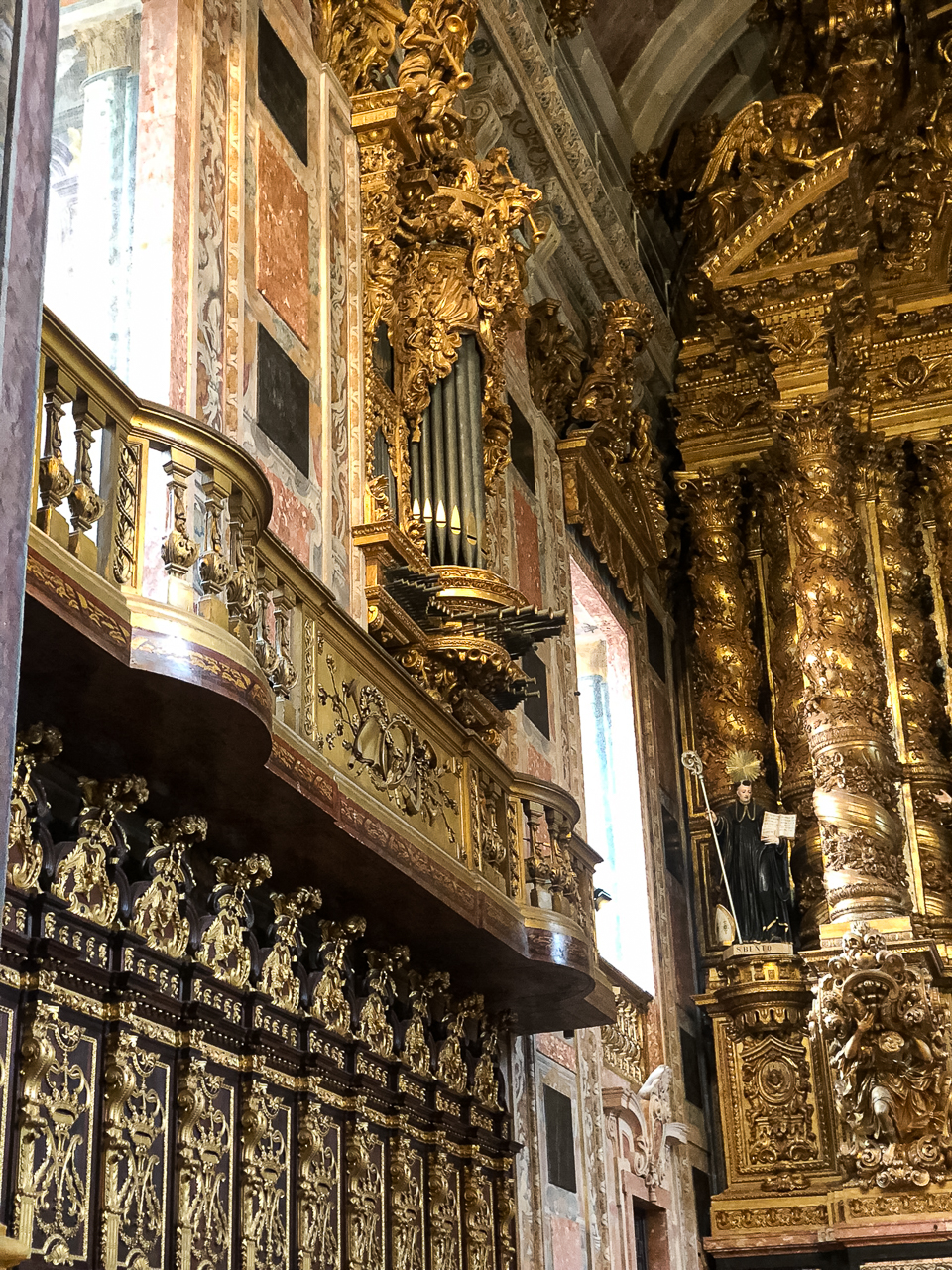
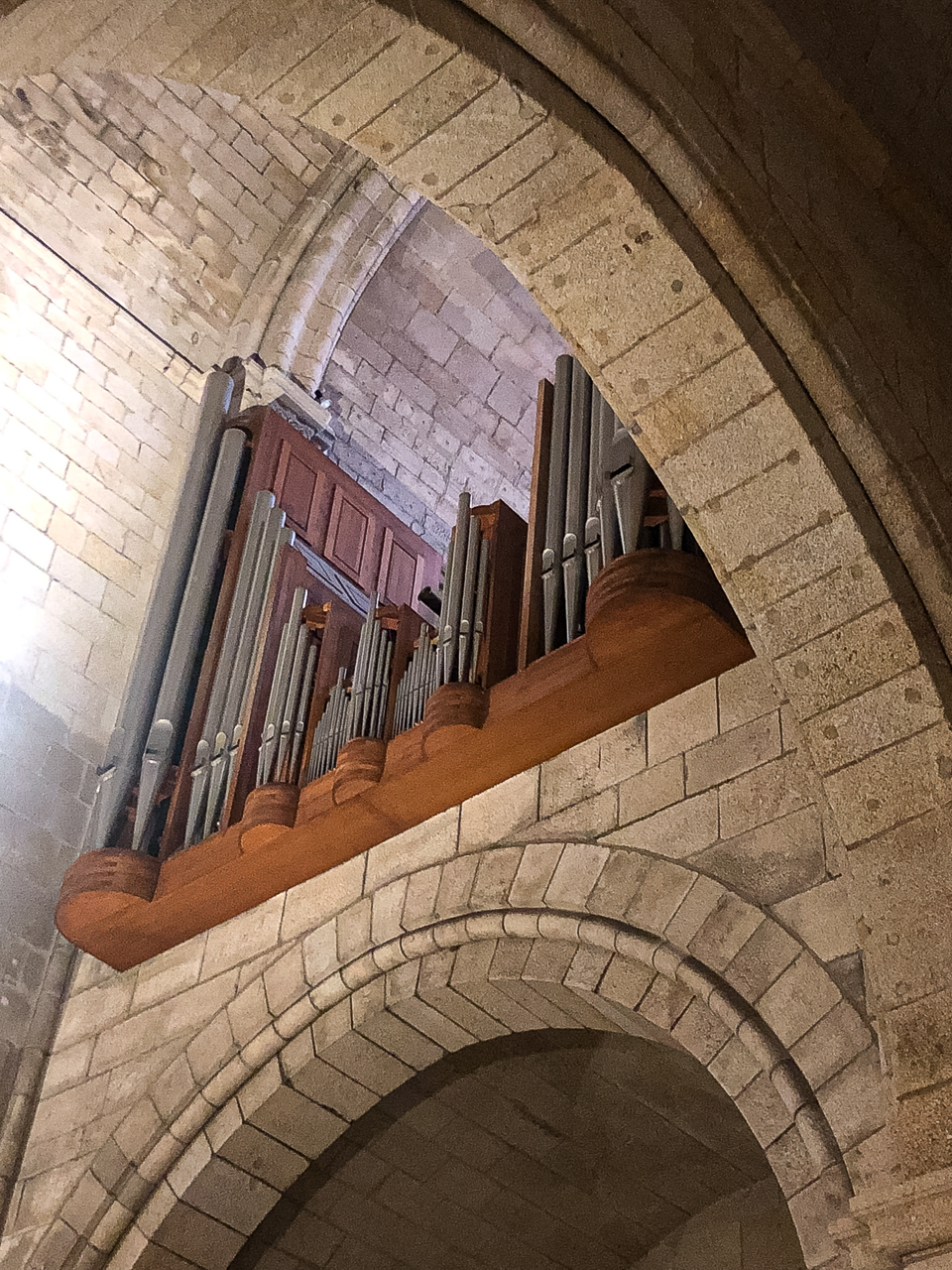
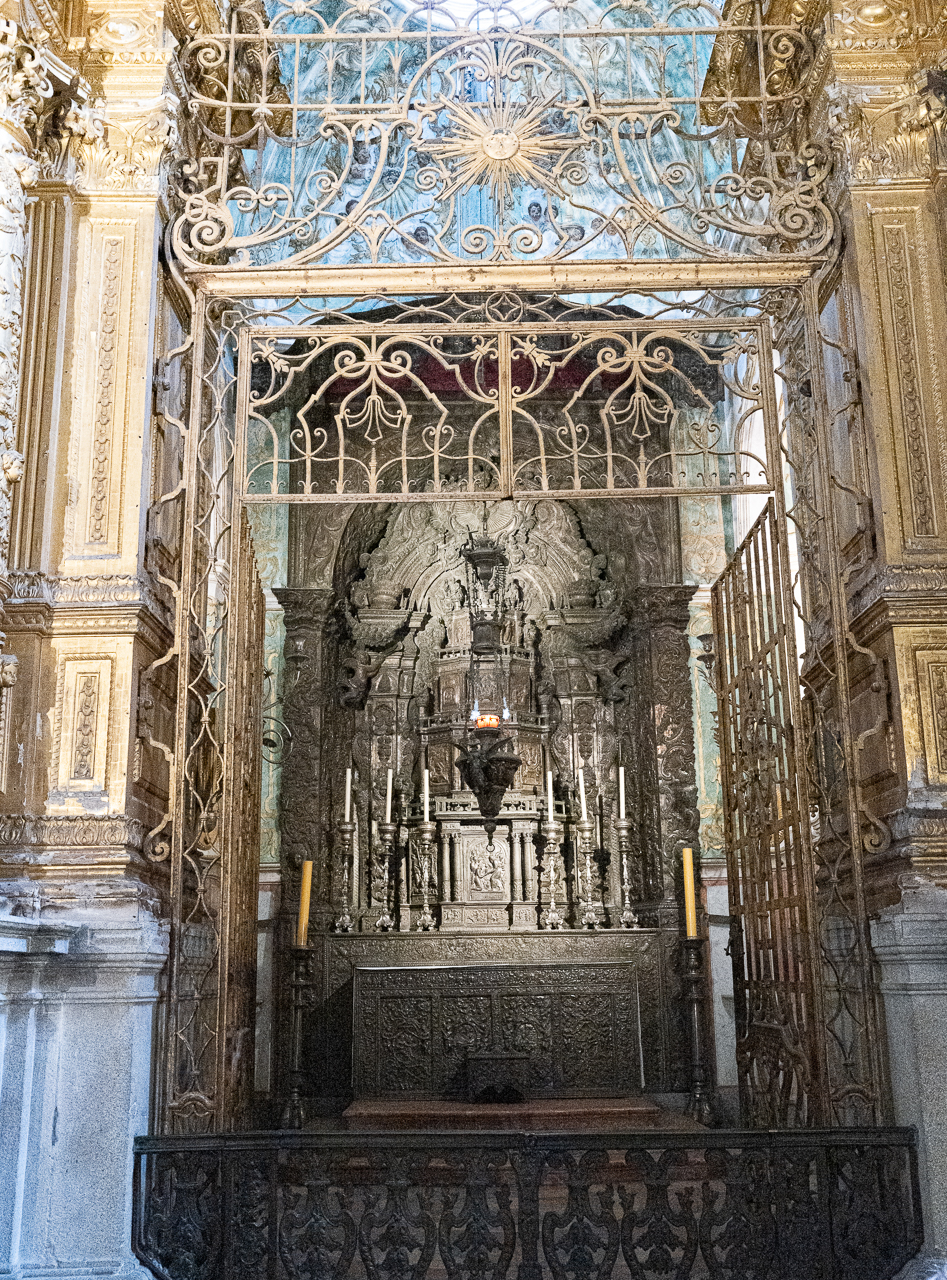
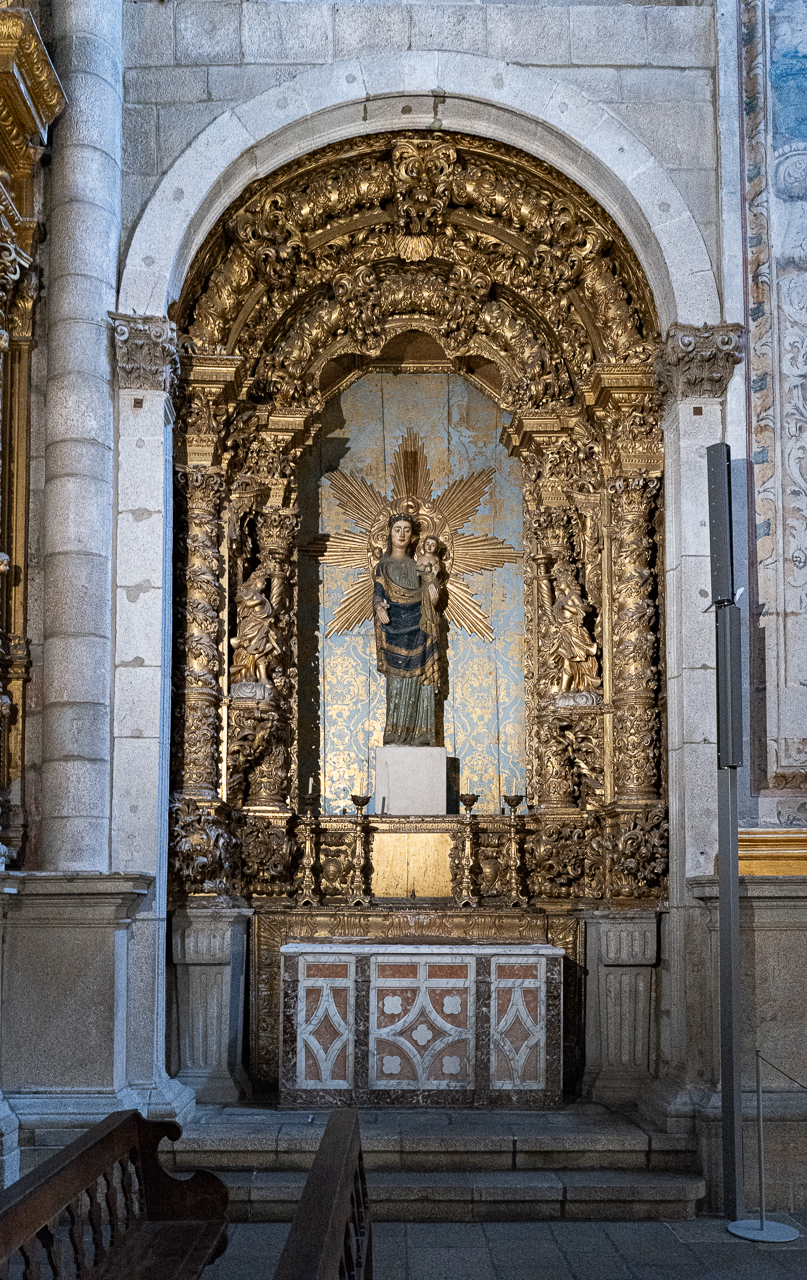
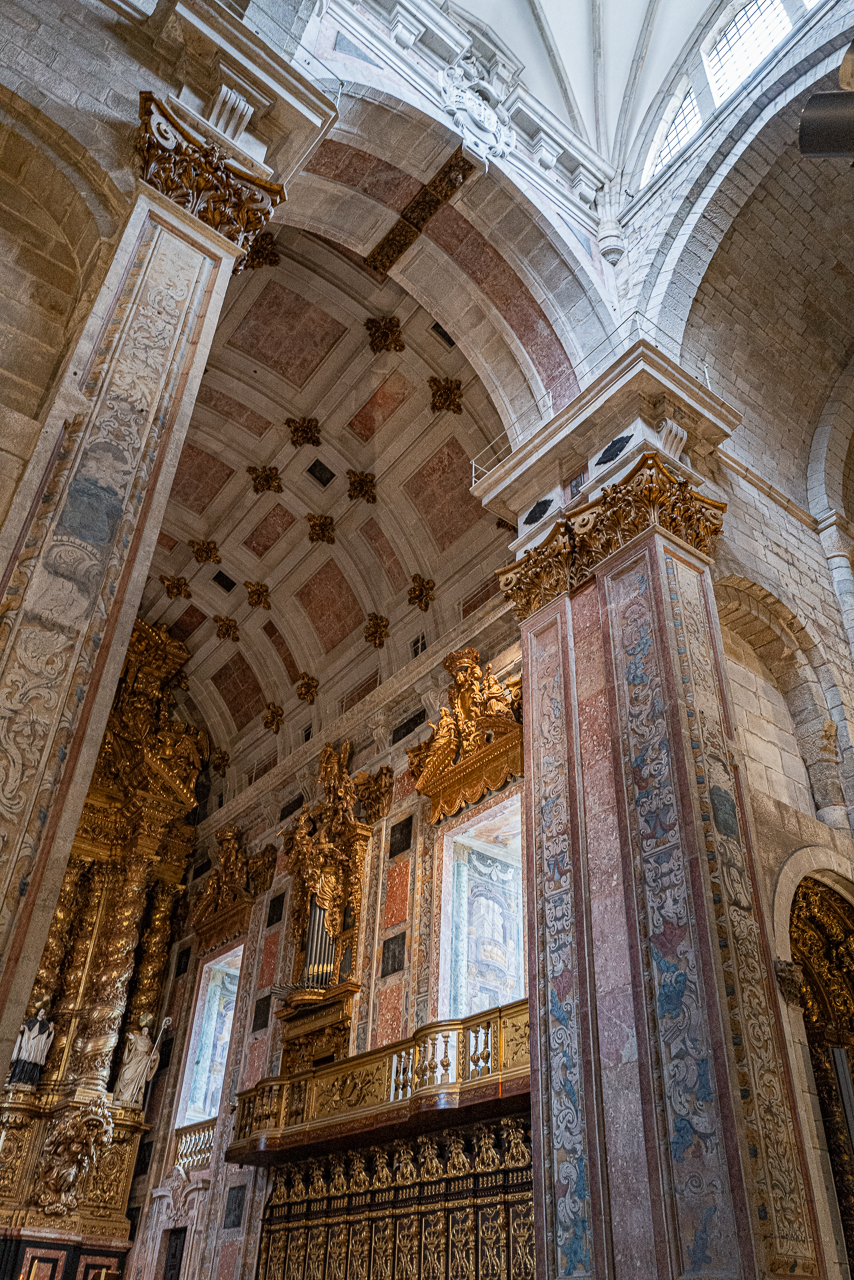
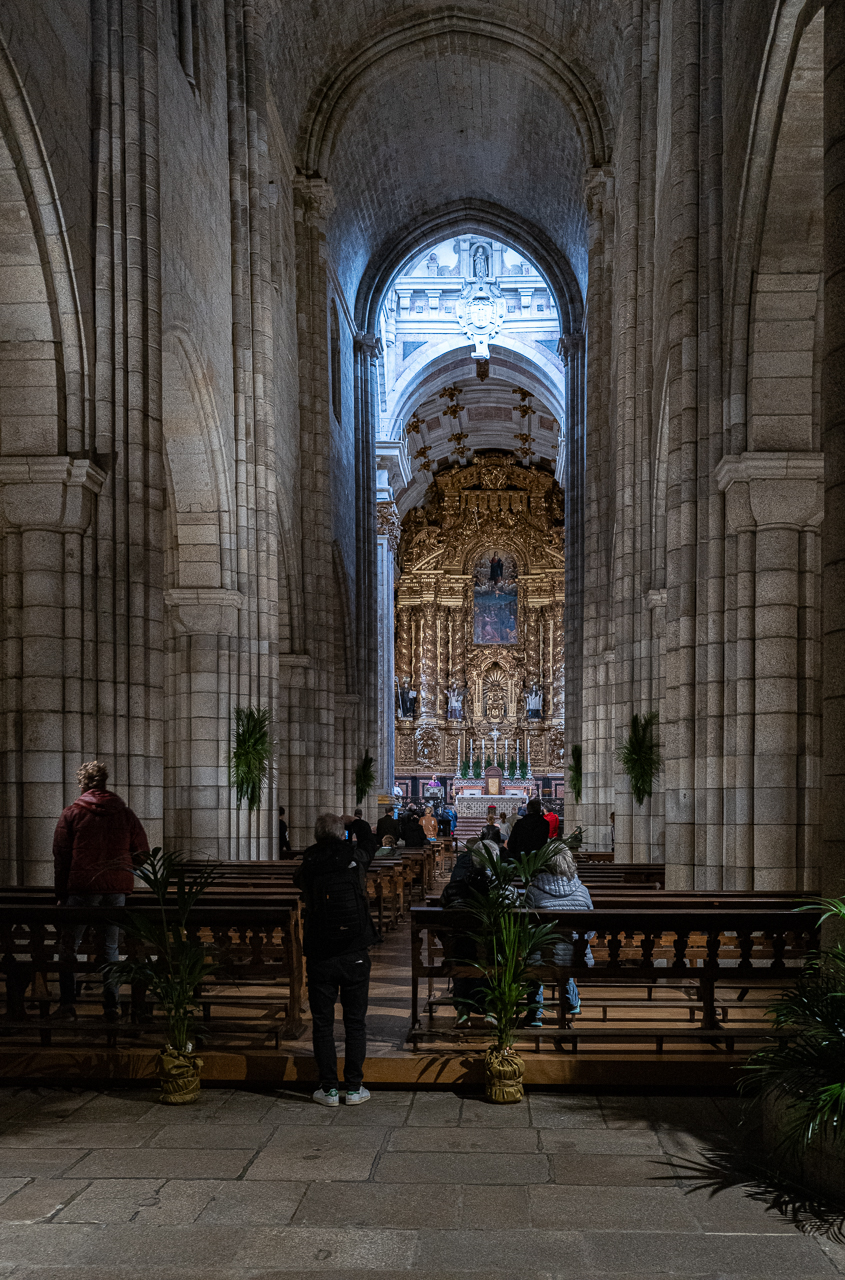
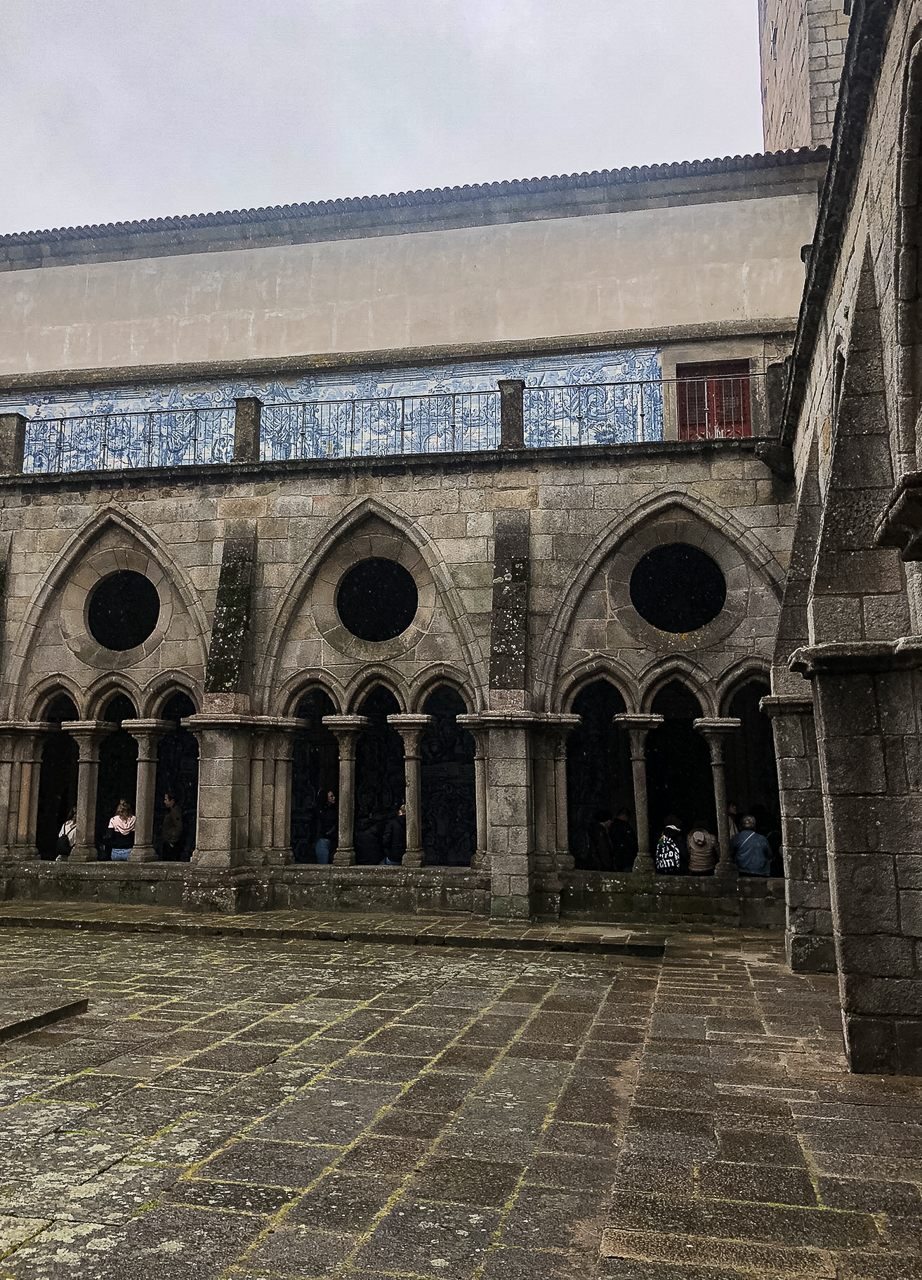
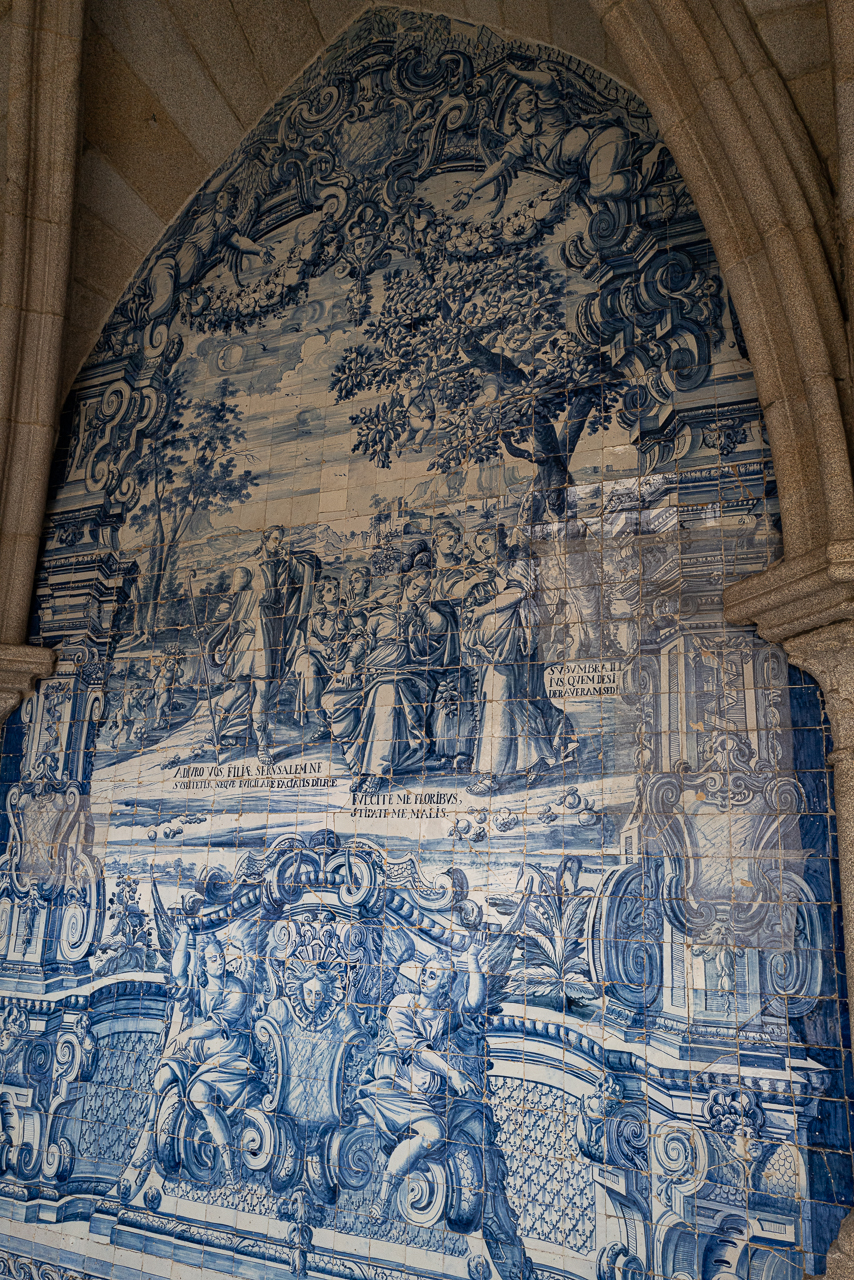
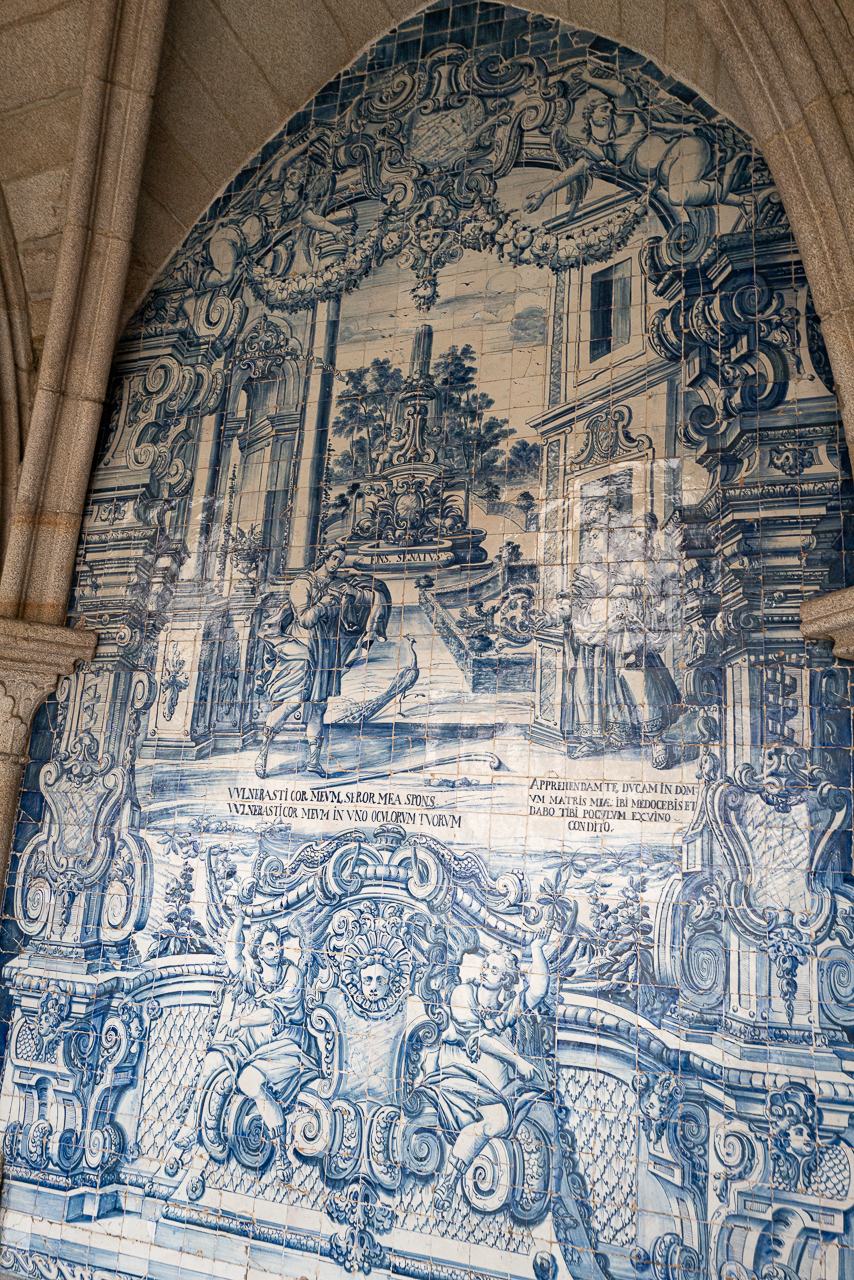
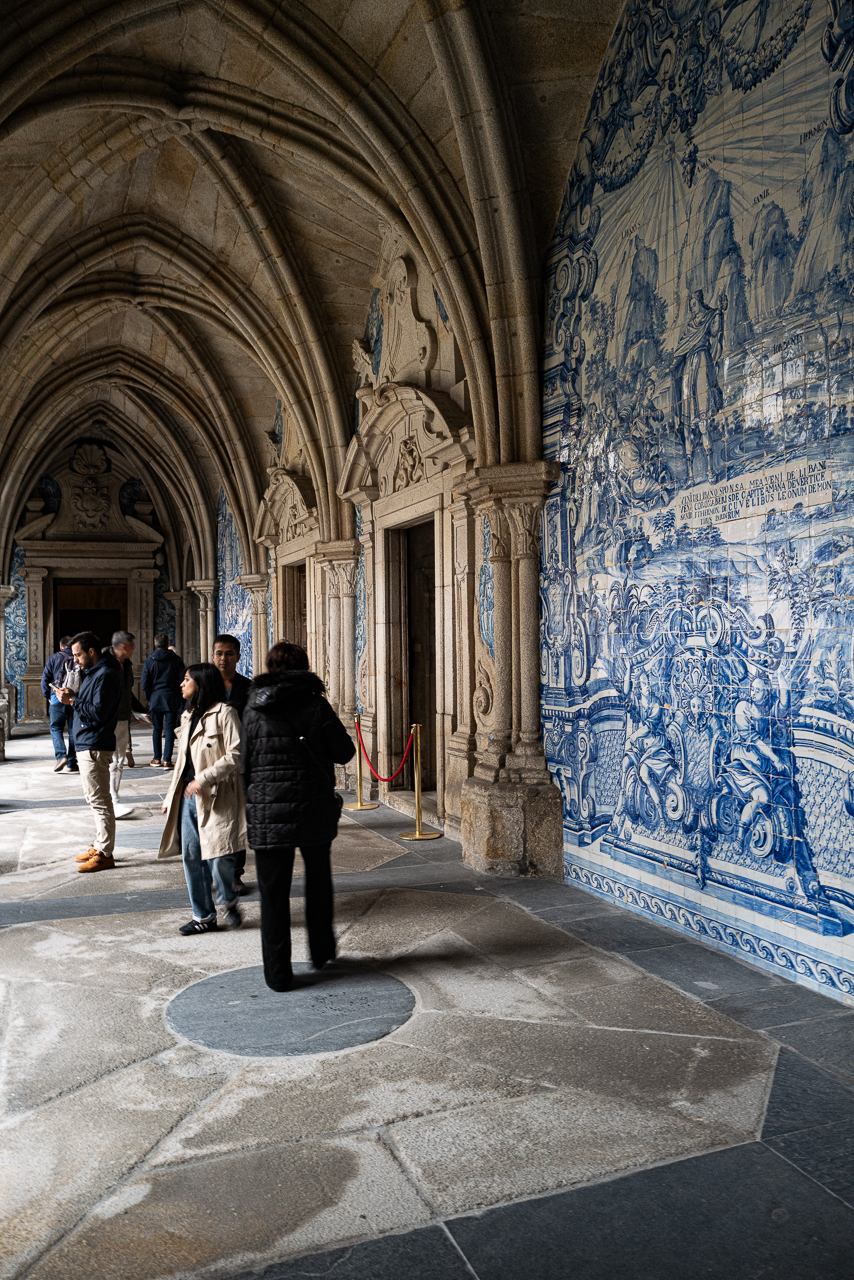
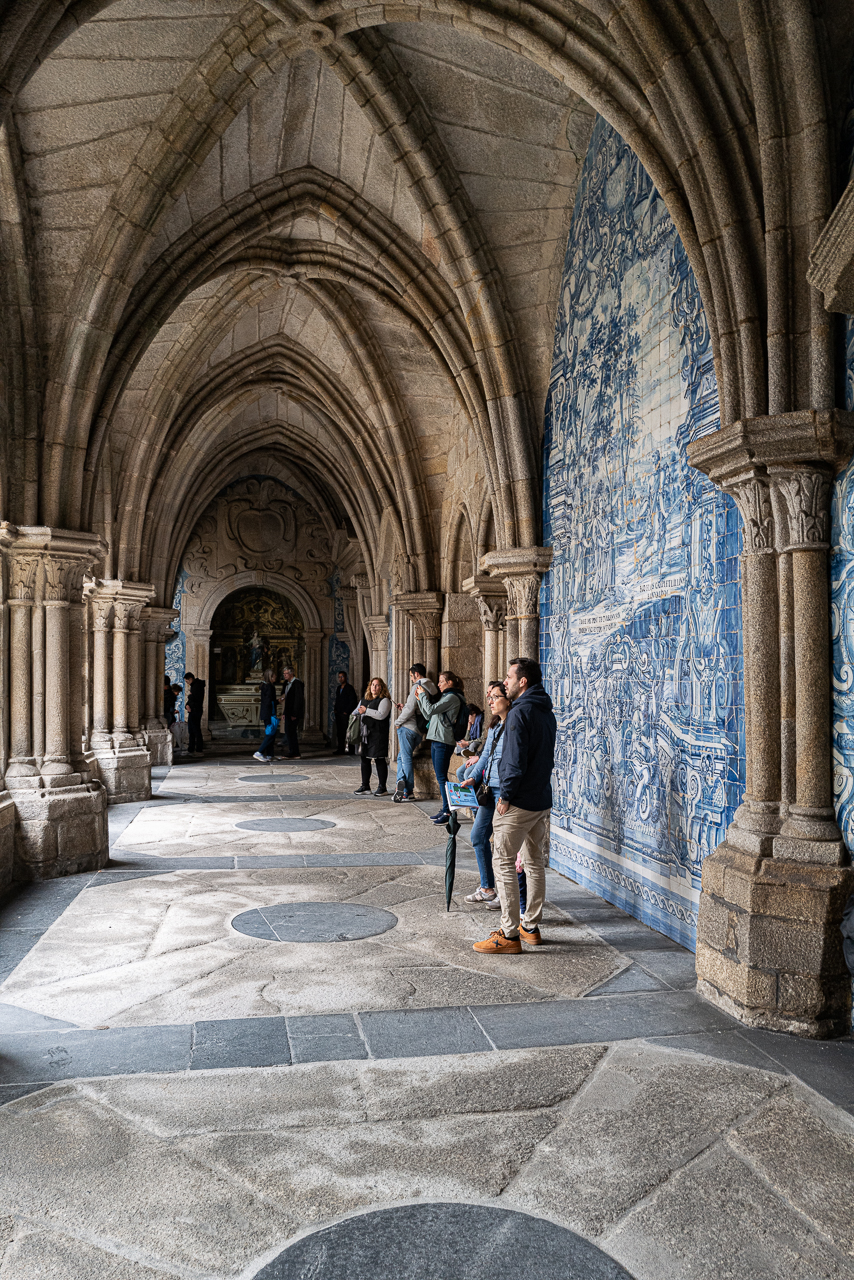
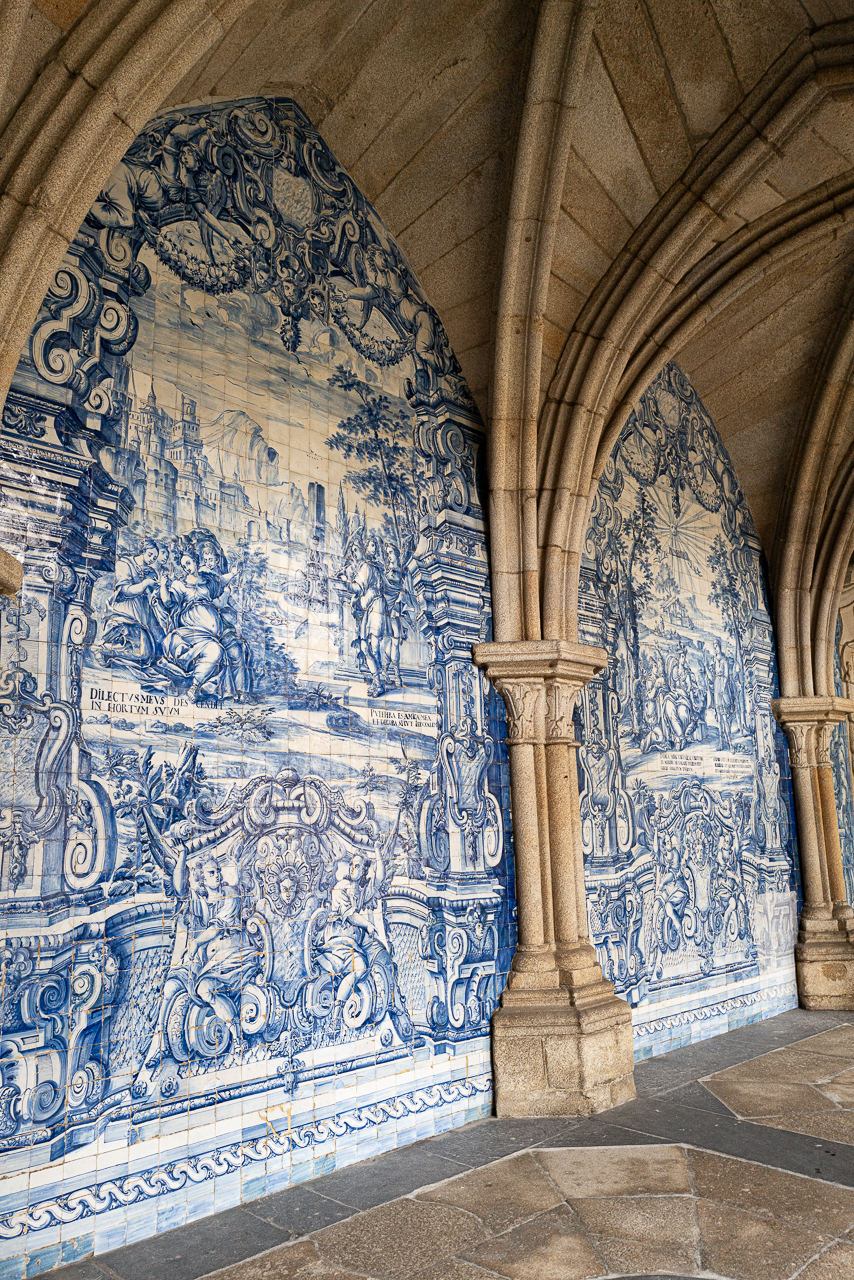
Construction of the Sé began in the middle of the 12th century and continued until the 1600’s. Major additions and improvements were made later, in the 18th and 20th centuries. Compared to many of the cathedrals we’ve visited in Spain, this one was a bit more modest, except for the main altar which is spectacular. The most interesting departure from the standard gray stone cathedral formula was the expansive use of azulejos, those canonical Portuguese blue and white tiles. Added in 1730 to the walls of the Gothic cloister, they were designed and installed by Valentim de Almeida, a celebrated tile artist of that era. They depict stories from the epic narrative poem Metamorphoses by the Roman poet Ovid as well as scenes from the life of the Virgin Mary.
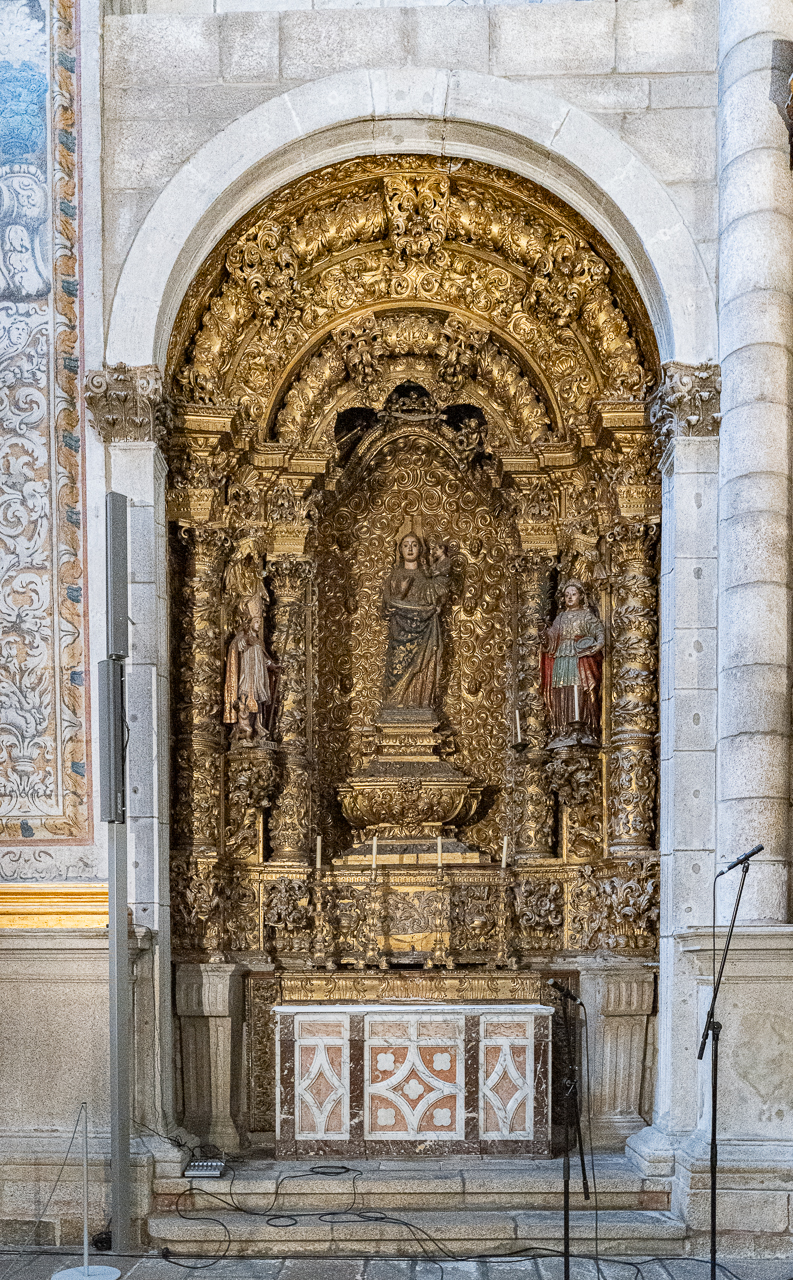
A mass started at 11 AM and we were treated to a recitation and songs delivered by a little old woman. She had actually told me earlier that I wasn’t allowed to take photos near the altar, which I already knew, and she led me away and lifted a guard rope to show me a beautiful altar off to one side. MLW asked “What have you gotten us into now?” as I followed my new friend.

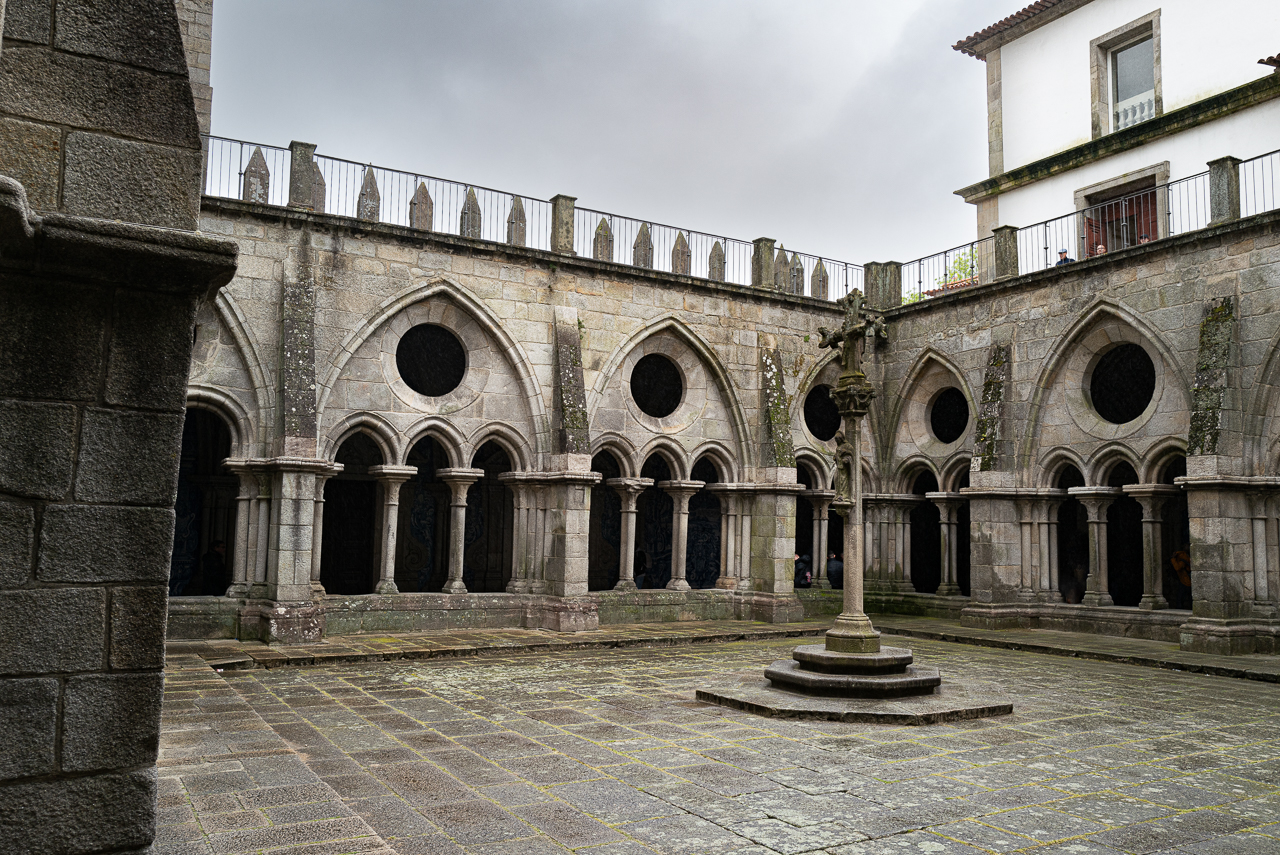
Azulelos originated in the 14th century and are a combination of Spanish and Portuguese styles. When the Moors conquered the Iberian peninsula in the 8th century, they brought a well-developed mosaic tile style. Known as “azzelij,” Arabic for “little polished stones,” local artists modified that style to suit Western tastes, and their work is reflected in the interiors of the Alcazar in Sevilla and the Alhambra in Granada. After the Reconquista, the style morphed into the distinctive blues we see today. They are quite common on the exterior of many 19th century buildings throughout Portugal and there is an exceptional museum in Lisbon devoted to their artistry.
It had mostly stopped raining by the time we left the cathedral although the wind was still howling. Opting to take the more mundane route home versus those charming alleys, we went down the hill and turned onto our street. Off the peak, the wind was gone along with the mist so we actually dried out before arriving home. Along the way, we stopped for take-out Argentine empanadas from a shop we’d spotted yesterday. A nice warm treat to fix our frozen bones.
 tbaroundtheworld
Yikes! Those routes are flat out dangerous holy cow! Lordy please be careful.
Ornate altar for sure, actually pretty cool and I love your little aside about your new friend. Hee hee!
So – these azulelos. I love the blue and white but my question is about the scenes, how they do it. Are the tiles installed and then the images painted on them or are the images done before the kiln process and then assembled like jigsaw puzzles?